
A Lifeline for Rural America
Community colleges face uncertainty during Trump’s second term
⚠️ You have free article remaining.
Log in or become a member for unlimited access.
The battle between the Trump administration and the Ivy League has dominated the news. The administration has withheld billions in research funding and other grants to force the institutions to close down diversity programs, limit international student enrollment, and change admissions policies. The administration has also reduced funding and staff for the US Department of Education, with an eye toward completely dismantling it. The effort to reshape higher education in the United States has not been limited to the federal agency or elite institutions, however. The campaign for change has been ambitious, with policies affecting a wide swath of students, from those in Harvard Yard to those attending community colleges across the country.
Administrators, instructors, and students at community colleges, which enroll nearly 40 percent of the nation’s undergraduate students, say they have been grappling with unique challenges during Trump’s second term. These institutions, too, are facing the prospect of cuts to programs. Many rely on grants from federal agencies such as the Department of Agriculture, which provides support for agriculture-related workforce training and research. In addition, in July 2025 Trump signed an omnibus reconciliation pacakge (a. k. a. the “One Big Beautiful Bill”) into law, slashing the Supplemental Nutrition Assistance Program and Medicaid, programs on which many community college students rely. One-third of these students live in households with incomes of less than $20,000 a year, according to the Center for American Progress, and many are worried about having enough to eat and getting the medical care they need.
Two-year colleges are a microcosm of their communities, and the relationship between them and their surrounding areas is deep and profound. Community colleges in rural areas like central Kansas, northern Michigan, and parts of Illinois play an outsize role in the lives of those living near them. Indeed, a million and a half people attend 444 different community colleges in rural areas, according to a 2023 Aspen Institute report. The colleges are crucial to helping their regions thrive. They offer General Education Development and English as a Second Language classes, serve as civic gathering spaces, and train and retrain workers for area jobs. But as the colleges face shrinking budgets and mounting policy pressures, they are struggling to keep up with their efforts to address area labor shortages and revive local economies.
“Our mission is to be part of the fabric of a community,” says Mike Gavin, head of the Alliance for Higher Education and former president of Delta College in Michigan. “These colleges are an invisible thread in the tapestry of the communities they serve, and at the heart of these colleges is a liberal education. That means developing the idea of putting yourself in other peoples’ shoes.”
The stakes for both the colleges and their towns are high. If community colleges lose funding from federal agencies, as many fear, the people who live in these towns and communities will feel the sting, too. Yet there are glimmers of hope. In some places, state politicians have laid the groundwork to expand the offerings of these colleges through policy initiatives. In Illinois, for example, political leaders have pushed to accommodate the growing need for education in rural areas by allowing community colleges to offer bachelor’s degrees, meaning students would spend four years at a community college rather than transfer to a university. At the same time, the people who work for community colleges have expressed a fierce determination to keep their institutions and towns strong despite the threats to their existence.
Even on a Sunday afternoon, a time when campuses are usually quiet, Carroll Community College, an institution with 4,800 students in Westminster, Maryland, was busy. A father was teaching his teenage daughter how to back into a parking space in one of the college’s sprawling lots, and people were pounding laps on a nearby track. Their presence on a Sunday was a reminder of the role that Carroll and other colleges like it play in the lives of those who live in their communities.
During the week, the campus in this small town in northern Maryland was even busier, filled with students, including high schoolers earning academic credit for college and working professionals enhancing their skills and knowledge, heading off to class. In 2023, Carroll awarded more than 470 degrees in subjects ranging from business administration and nursing to geology. On the outskirts of the campus, near a grove of trees, stand neat rows of solar panels. The college installed them nearly a decade ago as part of a community project to use renewable energy. The panels reflected the light on a recent afternoon, helping to provide electricity for buildings. The emphasis on the environment and sustainability issues reinforces the ties that the college has with the local community. In states such as West Virginia and Pennsylvania, other community colleges are helping with energy transition, retraining workers from fading industries like coal and manufacturing.
By taking classes in English literature and other subjects at Carroll while she was in high school, one former student, Bella Mosko, says that she was able to skip ahead in her pre-veterinary program at the University of Maryland. As a result, she will graduate a semester early, shaving about $15,000 off the cost of her education. “It saved me,” she says.
For her and many students, community college offers a way to move from high school to university without the sticker shock that comes with higher education. Community colleges can also offer an alternative to the social whirl of a large state university. For some, this is a godsend.
Another former student, Luke Carpenter, pulled up in front of a deli about a mile or so from the campus on a recent weekend. He climbed out of a car with a bumper sticker that says, “On my way to be quiet and weird in a social setting that I agreed to when I was in a better mood.” He and his girlfriend, Madi Newnum, who has also taken classes at Carroll, joked about the bumper sticker and its message about social anxiety. But it is a message that expresses real feelings.
Carpenter took a math class at Carroll while he was in high school and says that it helped him get ready for college. He is now studying mechanical engineering at the University of Maryland. Like others I spoke to, he says that the classes he took at Carroll gave him a chance to get ready for university. Rather than being thrown into a daunting social environment, the kind that inspired the car’s bumper sticker, he was able to adjust to college in a gradual way.
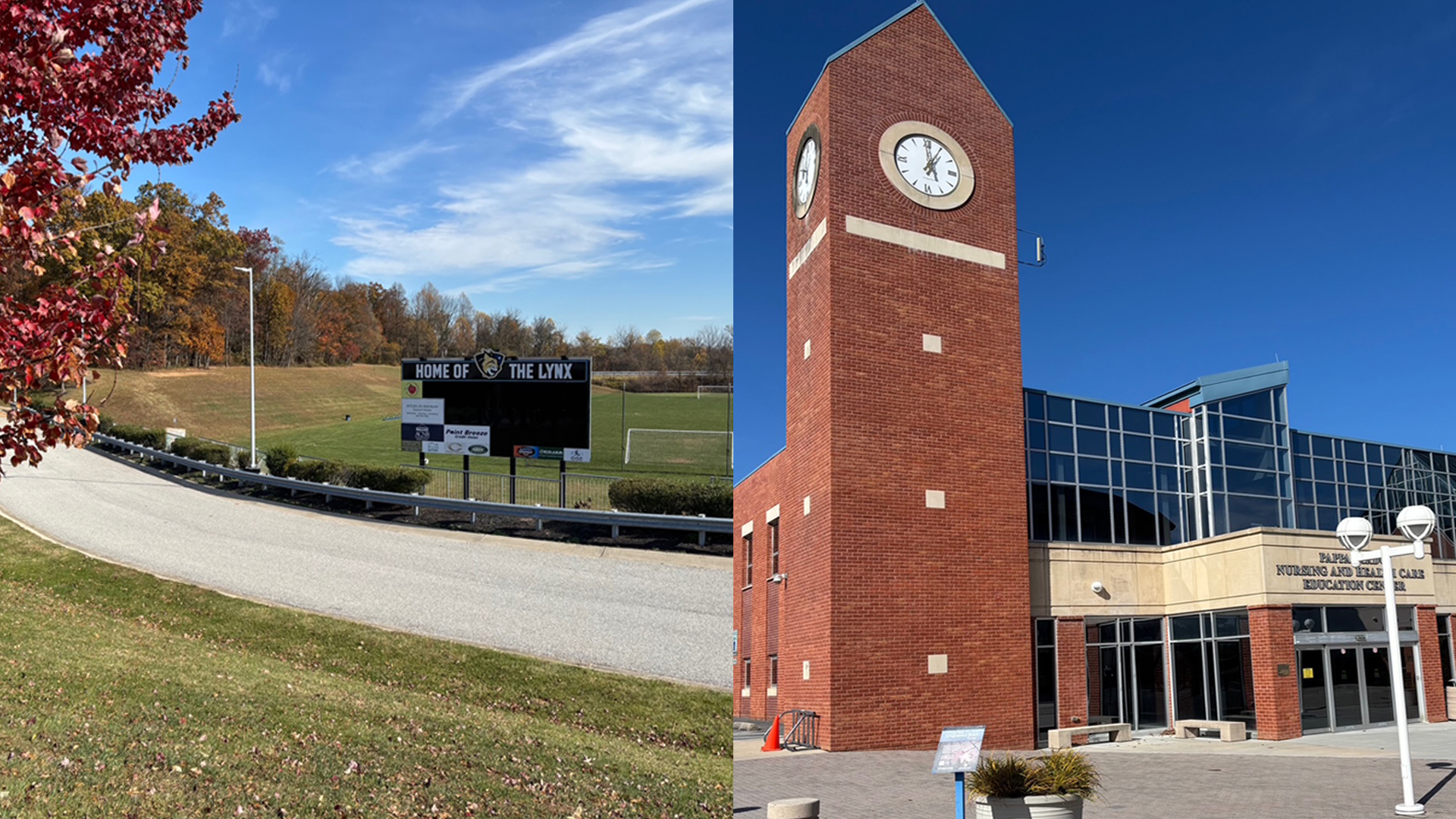
Holly Walter was drawn to Carroll because of its smaller size and proximity to home. She grew up in Westminster. Her father worked for a railroad, CSX, and her mother was a hairdresser at a salon called Golden Shears. Walter took classes in biology and other subjects at Carroll. At the time, she says, she worked as a night manager at a hotel.
“I was a very anxious student, and it gave me time to assimilate to college life,” she says. “It was easier and more affordable.”
At Carroll, she felt comfortable in her surroundings and found that she loved the world of learning. “I would just, like, read everything I could get my hands on,” says Walter, who today teaches health education to elementary school children.
Even those who do not go on to study at a four-year university benefit from their experiences at a community college. Armed with an associate’s degree, graduates can expect to increase their annual salaries by around $10,000, compared to what they would make with only a high school diploma.
Gavin, the former president of Delta College, says that two-year institutions offer an affordable path to a better life. “Community colleges are the most democratic institutions today,” he says. “We accept one hundred percent of students who apply. We are Statues of Liberty. We welcome everybody in.”
“We call America the land of opportunity, and community colleges contribute to that. They are bringing opportunities to Americans,” says Jessica Chittum, the assistant vice president for curricular and pedagogical innovation and the director of VALUE Operations at the American Association of Colleges and Universities (AAC&U). “Community colleges are a bridge, and they bring resources to students who are lacking and help them. That’s the American dream, right?”
The federal funding changes, though, are endangering many of these students’ education. Roughly a third of students at two-year colleges, according to the American Association of Community Colleges, receive federal grants, such as Pell Grants. On average, federal grants provide almost as much financial support for these institutions as tuition does: About 15 percent comes from the government, and 20 percent from the students themselves. But Pell and other grants have also been on the chopping block. As of July 2026, for instance, students on full scholarship are no longer able to apply for a Pell Grant, which supports students from low-income households. Previously, scholarship students could use the grant for books and transportation. In addition, students who support themselves through federal work study programs wonder whether they will be allowed to keep their jobs.
TRIO grants, designed for low-income students, first-generation students, and students with disabilities and which help support many enrolled at community colleges, are also under attack as part of the Trump administration’s push to pare back federal aid. The administration has moved them from the purview of the Department of Education to the Department of Labor, a transfer of responsibility that erodes the authority of the Department of Education and downplays the work of those who administer federally funded higher education programs. White House officials have also said that the grants are no longer necessary since people are finding other ways to study at institutions of higher education. “Access to college is not the obstacle it was for students of limited means,” officials stated in the administration’s fiscal year 2026 budget proposal.
College administrators have defended TRIO grants, calling them essential for students. Kimberly Jones, the president of the Council for Opportunity in Education, a group based in Washington, DC, says that she views the proposals to reduce funding for these grants as “a direct attack on students who dare to dream of college in the face of adversity.” She continued in a prepared statement, saying that “any attempt to dismantle these programs is shortsighted.”
Walter, the elementary school teacher who attended Carroll Community College, says that she worries about the impact of federal funding cuts on community colleges and how they will affect students. “I just feel everybody is on edge now,” she says. “I feel for the future of education.”
AAC&U’s Chittum says that if she hadn’t had the opportunity to attend a community college, she would not have been able to pursue higher education. “It was an education that my federal grants were able to support,” she says, explaining that she first studied at St. Petersburg College in Florida and then earned a bachelor’s in elementary education and a master’s in exceptional student education from the University of South Florida. Afterward, she earned a doctorate in educational psychology from Virginia Tech. If community colleges lose their funding, she says, the impact will be felt across the country.
“By taking their support away, we’re perpetuating poverty in rural areas,” she says.
In early 2025, as President Trump was talking about cuts to federal funding in the One Big Beautiful Bill, politicians in Illinois were planning to expand the offerings of the state’s community colleges. As it happened, the first community college in the country was started in a town outside of Chicago in 1901. The place was called Joliet Junior College, and over the years, more community colleges opened in Illinois and other states.
Illinois Governor JB Pritzker has argued that these colleges should offer bachelor’s degrees in fields that need workers, allowing community college students to earn a bachelor’s in fields like cybersecurity, nursing, and early childhood education. This, along with such course offerings as ancient and medieval Western philosophy and film studies, would give students at a community college a chance to receive a liberal arts education at a fraction of the cost of a four-year university. In turn, local employers would have a bigger pool of candidates for jobs that are hard to fill.
“Illinois has long been a leader in expanding educational opportunities and preparing our workforce for the jobs of tomorrow,” said Pritzker in an April 2025 statement. “By allowing our community colleges to offer baccalaureate degrees for in-demand career paths, we are making it easier and more affordable for students—particularly working adults in rural communities—to advance their careers while strengthening our state’s economy.”
Not everybody supports the idea. Capitol News Illinois has reported that some state lawmakers oppose the plan because they believe it would increase enrollment at community colleges, hurting the state’s four-year colleges. Administrators at four-year colleges in the state say they will lose students, and money, to community colleges. Other states have taken up similar efforts, including Iowa, where private institutions have expressed concerns about competing with state-funded community colleges that offer similar degrees at lower prices.
Ryan Gower is the chancellor of Illinois Eastern Community Colleges, a group that includes several institutions located on rural campuses. Long ago, he says, he took an astronomy class at a community college. He loved the course work, he says, and eventually he chose a life devoted to education. Gower says that he thought that it was important for the colleges to serve their communities, and that means awarding bachelor’s degrees to students. He points to labor shortages at elementary schools and hospitals. “They cannot fill positions,” he says. “And where we’ve got shortages—yes, we need to be awarding bachelor’s degrees to help fill them.”
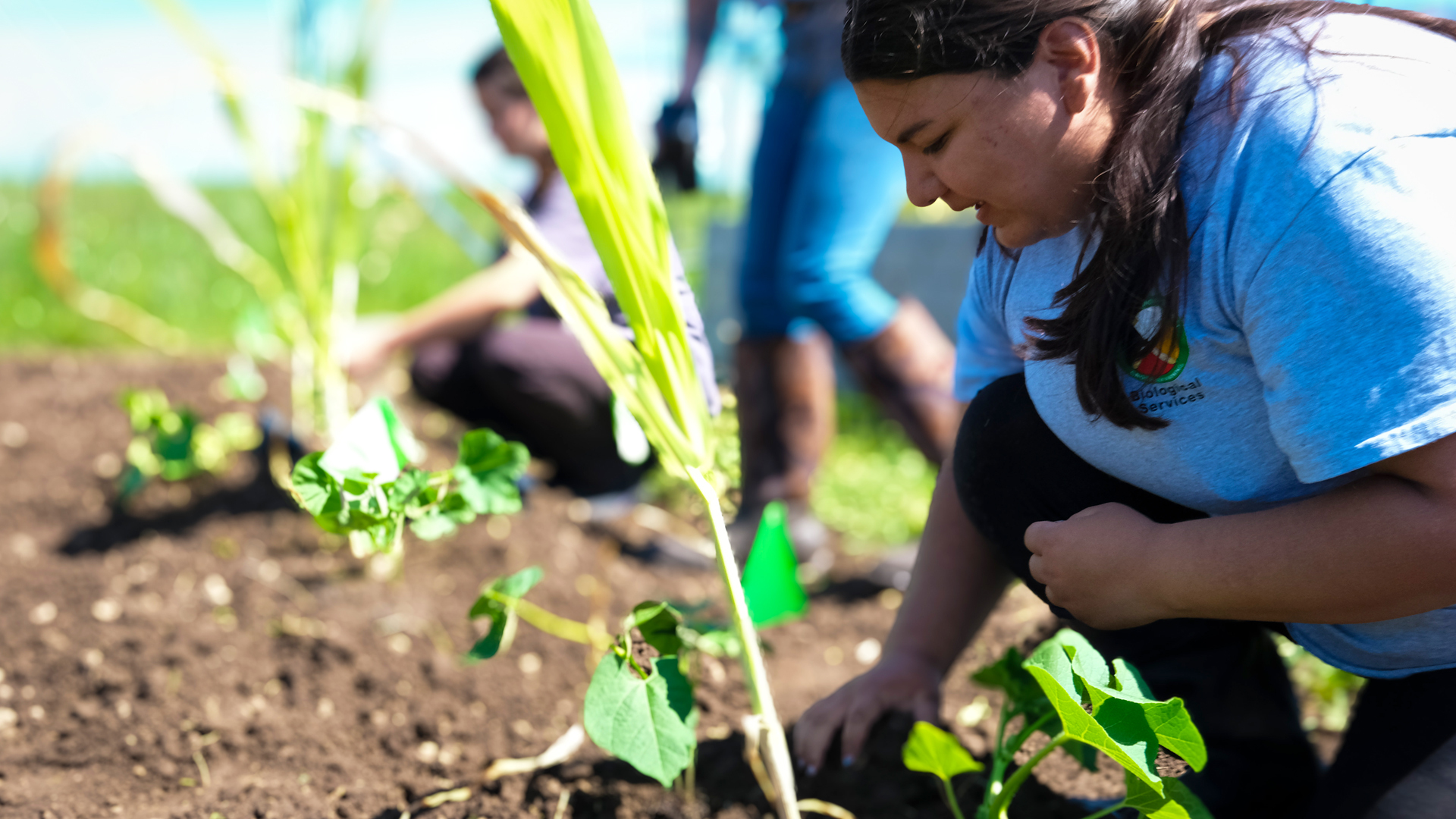
Hundreds of miles from Illinois Eastern Community Colleges’ Olney campus, Dennis Carrick, a farm technician at Bay Mills Community College, a tribal college in Brimley, Michigan, was snacking on homemade venison jerky during a break from class in the fall of 2025. The college is located in Chippewa County, near Lake Superior and the Straits, narrow waterways where he learned to fish, a skill he now passes on to students. The college, which graduated 184 students in May 2025, has a science lab and hoop houses, tunneled, unheated greenhouse structures. Yearly tuition and fees in 2025 came to $3,320.
Carrick has worked at Bay Mills for about five years, teaching students how to hunt deer with a bow and arrow and can vegetables for the winter, things he learned from his grandmother when he was a boy. At tribal community colleges such as this one, many students pursue degrees relating to the environment and are interested in sustainability issues. According to the college’s annual report, in 2022–23 Bay Mills received $315,000 from the US Department of Agriculture to help with supplies, equipment, facilities, as well as the upkeep of the campus’s 280-acre Waishkey Bay Farm. With fresh produce from the farm, Bay Mills hosts monthly potluck dinners for people in the community. “The goal is to bring back traditional eating,” Carrick says.
Tribal college instructors like Carrick are vulnerable to the proposed reductions in federal aid since so many of their programs rely on it. Funding and staff for the Department of Education have been cut, and responsibility for some of the assistance provided to tribal colleges has been shifted to the Department of Interior. As Inside Higher Ed reports, the reorganization at the federal level creates uncertainty for tribal college administrators, making it harder for them to get access to the funds.
The Trump administration has already reduced funding for many of the clean-energy projects on reservations for which tribal colleges help train workers. Despite the ominous signs from Washington, Carrick says that he is confident that he and the instructors will be able to carry on with their work. “They’ll threaten, threaten, threaten,” he says, referring to those trying to cut the aid. “They do that to put fear into people. But our community won’t let that affect us. There are always ways around it.”
Great Bend is a town of about fourteen thousand people located in the central part of Kansas. Wheat fields unfold across the plains. At Barton Community College, students can get degrees in subjects ranging from agriculture economics to theater production. The college attracts people from across the region both for its classes and for its art exhibits, hosting shows of paintings and other works in the Shafer Art Gallery. A recent acquisition is the “American Pastoral” collection of hauntingly beautiful pastels by Roberta Condon that depict farmhouses and eerie landscapes. As one of the instructors, Vic Martin, says, “We’re a community college in Kansas, with an absolutely great art gallery.”

The gallery is flourishing in part because of private donations. Still, the cuts in federal assistance for low-income families, particularly the resources for food nutrition, have created a crisis in other areas. For more than five decades, students have volunteered for a Meals on Wheels program, serving more than 1,200 elderly people every month. Funding for the program is provided by the federal government under the Older Americans Act Nutrition Program, distributed to state governments, and then allocated to Meals on Wheels. But administrators at the college say that because of the federal budget cuts, they have begun to run out of money for the Meals program. They are looking for additional funding from government sources. And luckily, Kansans have stepped up personally and contributed their own money to support the program.
“We all pitch in,” Martin says. He explains that the cutbacks have been absorbed by those who work at the college and live in town. “People out here are pretty self-sufficient. . . . We find ways to get things done.”
He and the other instructors have worked with business owners to tailor their programs for students, with a goal of future employment. For instance, Barton students can learn about weights and measures through a curriculum that includes computer training, techniques for repairing scales, and modules on rules and regulations for weighing items. Classes are held for four to six hours a day, and the program lasts sixteen weeks. Graduates can earn an annual salary of $55,000 working on scales at Walmart. For those who specialize in large scales, measuring weights of trucks and railcars, salaries are $80,000 a year. “We help people to learn, grow, and provide better lives for themselves,” Martin says.
“There’s a desperate shortage of these technicians,” he adds. “The jobs will be lined up before they graduate.”
Other community colleges have been building certificate programs in partnership with local industries, preparing students for jobs that don’t require four-year degrees but could lead to middle-class wages.
East Central College in Union, Missouri, a community college with 2,700 students located in the Missouri River Valley, provides training for local companies. The training program is run by a half dozen or so people working in the college’s Center for Workforce Development, and funding comes mainly from the state. The money is available through the Missouri One Start Customized Training program, established in 2019.

Outreach coordinators from the college’s Center for Workforce Development meet with human relations directors of local companies on a regular basis, speaking with them about possible programs for their employees. One of the company directors fills out paperwork for the program. An administrator at the college helps them with the forms and then hires contractors to run the training sessions. In this way, the administrators at East Central College have organized training for companies specializing in precision manufacturing, electrical equipment, automotive sealing, and meat processing. Upon completion of the program, the employees at these companies earn a certificate from the college.
In 2025, says Jon Bauer, president of East Central, the college provided training for more than twenty companies. “We can set up a training room on the shop floor,” he says. Employees attend sessions about new technology at a manufacturing plant, for example, and can then head back to work “and not lose that time,” he says.
Community colleges were created more than a century ago to give Americans across the country, and especially in rural areas, a chance to take college courses. In terms of higher education, as Eduardo Padrón, former president of Miami Dade College, once said, they are a “great American invention.” Today, a degree from a community college is one of the best deals you can find: Graduates of these colleges can pull themselves, and collectively the nation, out of tough economic times and help forge the way to a more prosperous and enlightened future.
Back at Bay Mills, Carrick says he has faith in his college and its mission. When asked what he would do if federal cuts continue, he says that he would make sure that he and his colleagues could carry on with their teaching. “I would fight for it,” he says. “I would sell everything. Even if it took every penny I had, I would still fight for what’s right.”
Exclusive Content