
‘We Were Living in a War Zone’
Macalester College President Suzanne Rivera on raids, protests, and a campus on edge in Minnesota
⚠️ You have free article remaining.
Log in or become a member for unlimited access.
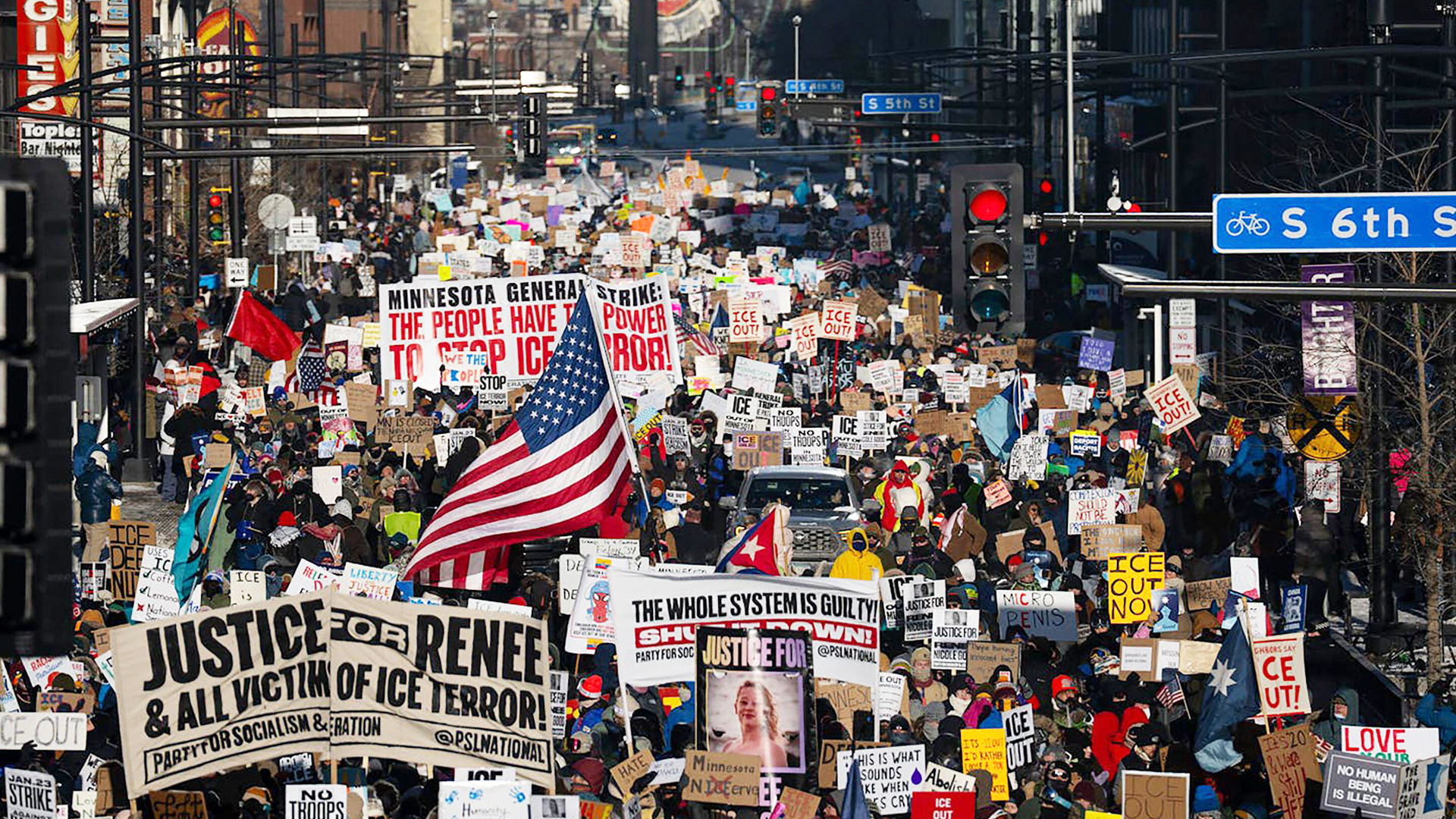
In early 2026, Minnesota once again found itself at the center of a national reckoning over law enforcement, civil liberties, and the limits of federal authority, echoing the intense scrutiny and upheaval that followed the 2020 murder of George Floyd in Minneapolis. This time, the catalyst was a surge of federal immigration enforcement across Minneapolis and St. Paul that expanded beyond routine operations into a broader civil liberties and federal–state conflict, marked by disputed shootings and the detention of legal residents.
From December 2025 through February 2026, the Trump administration launched Operation Metro Surge, deploying roughly three thousand federal personnel to Minnesota—including agents from Border Patrol, Immigration and Customs Enforcement (ICE), Homeland Security Investigations, and other federal law enforcement units—in a sweeping effort targeting undocumented immigrants. The operation led to an estimated four thousand arrests. Although the surge has since been scaled back, as of May 2026, around four hundred agents remained in the Minneapolis area.
Against this backdrop, tensions escalated sharply in January after ICE agents fatally shot Minneapolis residents Renée Good and Alex Pretti in separate incidents weeks apart, sparking sustained protests, strikes, and demonstrations across the state as residents demanded accountability and an end to the federal operation.
The unrest quickly spread beyond city streets into workplaces, educational institutions, and civic institutions. Students across Minnesota, from high schools to colleges and universities, organized strikes, walkouts, and marches to protest immigration enforcement actions and the climate of fear that many immigrant families reported experiencing. Students rallied at the state capitol in St. Paul and demonstrated in neighborhoods around the Twin Cities, saying that the heavy presence of federal agents was disrupting daily life and making communities feel unsafe.
For leaders of colleges and universities across the Twin Cities, these events posed significant challenges: how to ensure the safety and well-being of their campus communities, support students navigating anxiety and grief, and carefully respond to rapidly unfolding political events directly affecting many students. At Macalester College in St. Paul, these issues were especially urgent due to the institution’s internationally diverse student body and long-standing emphasis on civic engagement and democratic participation. Roughly one-third of the college’s students come from outside the United States or are US citizens who grew up abroad, making Macalester one of the most internationally diverse liberal arts colleges in the country.
As immigration enforcement surged in the Twin Cities, many students worried about affected family members, friends, and communities. College leaders grappled with how best to support students while reaffirming their institution’s commitment to democratic values, free expression, and responsible citizenship.
President Suzanne Rivera, who has led Macalester since 2020, was at the center of the college’s response. A biomedical ethicist by training and Macalester’s first Latina president, Rivera often emphasizes the role higher education plays in preparing students for thoughtful participation in democratic life. During moments of uncertainty and conflict, she has argued that institutions like Macalester must do more than respond to immediate crises. They must also help students develop the habits of responsible citizenship: critical thinking, respect for differing viewpoints, and a willingness to engage constructively in public life.
In the following conversation with Liberal Education, Rivera reflects on how Macalester navigated the turbulent period of intense immigration sweeps and the demonstrations against them. She discusses the support the college offered students, how institutions of higher education can foster democratic engagement without deepening polarization, and what it means to educate responsible citizens on a highly diverse campus in a time of political uncertainty.
How did the recent protests and civic unrest in the Minneapolis–St. Paul area unfold from the perspective of the Macalester College campus community? What were the primary concerns students and faculty voiced during those events? How did you respond?
Macalester is an intentionally international campus. When immigration enforcement intensified across the Twin Cities, the effects were immediate. Although no agents entered campus, they operated directly adjacent to it, seeding fear among students, employees, and neighborhood businesses. Many of us began to carry our passports out of concern we could be detained or questioned. Really, to me, it felt like we were living in a war zone.
The college’s leadership responded quickly. We kept residence halls and dining services open over winter break for international students who feared they could not return if they left the US. We organized faculty and staff volunteers to pick up students returning from break at the airport, helping them avoid enforcement activity, while also offering temporary hybrid instruction and adjusting operations to prioritize safety. Across campus, the dominant emotions were fear and uncertainty, which we met with coordinated efforts to support students and sustain community.
How did Macalester balance academic continuity with the emotional and logistical impacts of civic unrest, especially for students directly affected?
We chose not to halt or cancel classes: We believed it was essential to deliver on our mission and to provide stability during a period of upheaval. For many students, the campus and classroom were the safest places they could be, and many wanted to be in community with peers and caring professors. Even during two strike days, we kept campus open. This was for three reasons: (1) we could not presume all students wished to strike; (2) the classroom remained a place of safety and support; and (3) closing the campus would diminish the moral force of civil disobedience, which depends on individuals choosing to risk something rather than being directed to do so.
In reflecting on how students engaged in recent protests, what stood out to you about the nature of student activism?
I was incredibly proud of our students, as well as our faculty and staff. Many engaged in peaceful demonstrations and in on-the-ground mutual aid and safety efforts, including training as observers to document arrests and bear witness to potential human rights violations, often at personal risk. They also put effort into caring for one another. Students and employees organized not through top-down directives but through Signal chats and shared documents to walk peers home, provide food, and offer rides.
This response reflects a long-standing commitment to civic engagement at Macalester, supported by programs that connect students to community work and democratic participation. What stood out most was a relentless compassion that went beyond even the college’s own expectations of mutual responsibility.
In earlier campus protests such as “Mac for Palestine,” you emphasized the importance of peaceful expression and respectful dialogue. How do campuses get from words about peaceful expression and dialogue to that becoming a lived reality? Are you seeing progress with this on your campus?
We do not always get it 100 percent right, and we have to tolerate a certain number of mistakes. From orientation forward, we emphasize both the courage to speak up and the responsibility to choose words that do not intentionally wound. The goal is to practice both at once: to say something difficult and challenging while exercising care for others.
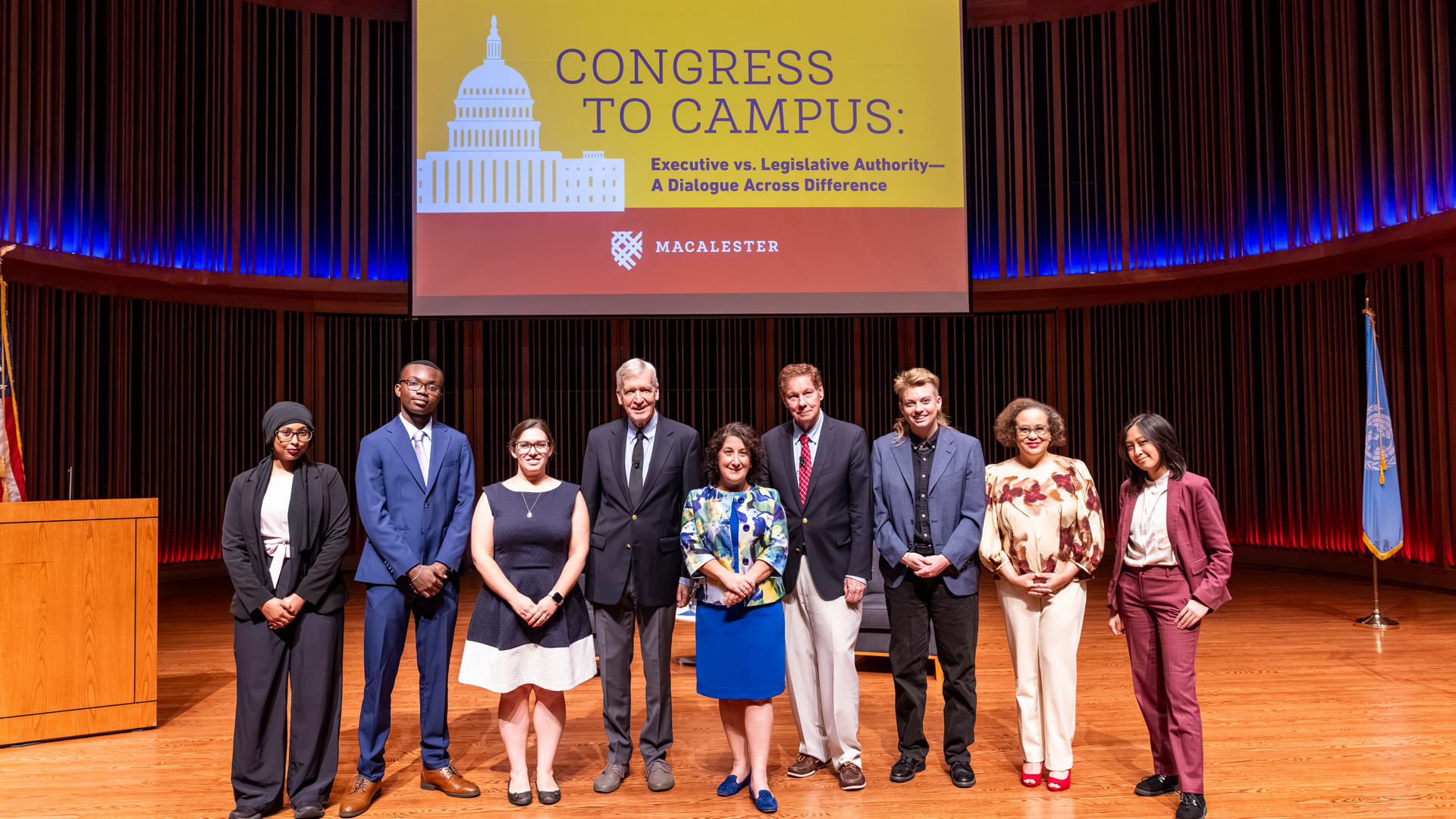
We model this through programs such as Congress to Campus, where a former Republican member of Congress and a former Democratic member engage in a contentious issue with principled, respectful disagreement. Students observe that they can argue without insults or threats.
In a community with people from more than one hundred countries, disagreement is inevitable. Our aim is to cultivate curiosity, listening, and the skills needed to live and learn together in a diverse, democratic community.
What concrete recommendations would you offer other campus leaders preparing for or navigating similar moments of civic protest or crisis? What policies, infrastructures, or relationships are most critical for colleges to build before such events occur?
It’s essential to have a senior leadership team within which there’s a lot of trust and interdependence. No one person has expertise in every operational area, so leaders must rely on one another to solve problems collectively. I arrived at Macalester on June 1, 2020, at the height of COVID and just days after George Floyd was murdered in the Twin Cities. The lessons from that period remain invaluable and directly informed our responses to the recent crisis.
First, communicate, communicate, communicate. There is no such thing as overcommunication in a crisis. Regular updates—to students, employees, alumni, parents, and trustees—help people understand what is happening and why decisions are being made. When information is not shared, people fill the vacuum with misinformation or fear, which can quickly escalate into panic.
Second, college presidents must acknowledge people’s emotions—including their own. Naming fear, uncertainty, or grief does not signal weakness; it builds trust and encourages individuals to seek support. Especially for students, seeing leaders speak openly about challenges models the kind of community care necessary to navigate crises together.
Macalester has long championed liberal education as preparation for citizenship and ethical leadership. During a time of political turbulence and polarization, how does a liberal education equip students to participate constructively in democracy?
A liberal education prepares students for democratic participation by giving them the ability to ask critical questions, evaluate evidence, communicate persuasively, and exercise their agency. It also fosters a sense of civic duty, a desire to contribute to the common good and to care for our democracy through active, informed engagement, not only as voters but as members of the citizenry.
While more narrowly defined technical degrees may prepare students for specific jobs, a liberal education is designed to prepare them for democratic life. Students are challenged to question the status quo, to ask difficult questions—even of their professors—and to approach texts with skepticism. In doing so, they take ownership of their learning in ways that serve them not only in their careers but as engaged participants in a democratic society.
With upcoming midterm elections, what specific strategies is Macalester using to encourage voter registration and turnout among students?
Macalester takes a comprehensive approach to supporting student participation in elections. Through our community engagement center, staff inform students about their voting rights and help them navigate practical logistics, including registration and getting to the polls. We provide information before elections to help students understand what is at stake—not only the candidates on the ballot but also referenda and other measures. Students are guided through options such as absentee voting if they choose not to vote in Minnesota.
We also host candidate forums, often sponsored by student groups, so students can engage directly with those running for office. As a result of these sustained efforts, Macalester has consistently had one of the highest voter participation rates of any college or university in the country.
What are the most important initiatives you are prioritizing now to advance civic engagement, resilience, and community well-being over the next academic year?
We are prioritizing a set of initiatives under the umbrella of Dialogue Across Differences, an initiative which brings together programs such as Congress to Campus, the Campus Free Expression Project, the Civil Discourse Project, and the Critical Dialogue Series, as well as our participation in College Presidents for Civic Preparedness. Together, these efforts form a kind of mosaic, with the goal that every student will engage with at least one experience before graduating.
The aim is to prepare students for lives of meaning and consequence, not simply for careers. Career readiness is the baseline; we expect our graduates to have an impact on the communities where they live and work. These programs are designed to help students be effective in their workplaces and communities—as organizers, leaders, and citizens—and to contribute not only to economic life but to a broader civic prosperity.
What gives you hope in this moment?
The students. Whenever I start to feel discouraged about what is going on in the world, I get up from my chair and go be around students. I watch them play a basketball game, listen to them recite poetry, hear them present a capstone project, or share a meal with them in the dining hall. They really are magnificent. They restore my faith in humanity and remind me of the many reasons we have to remain optimistic about the future.
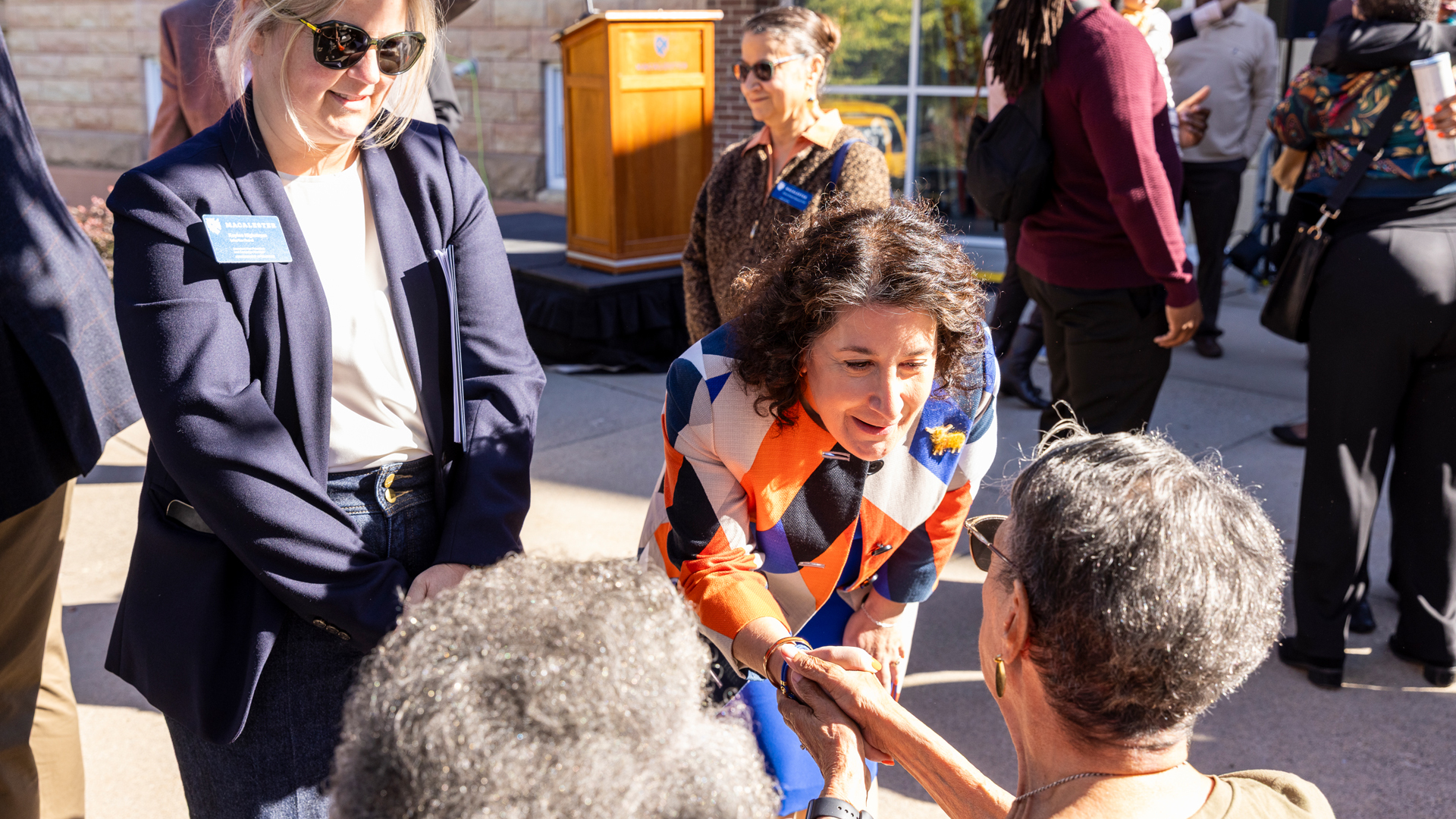
Lead photo: Suzanne Rivera, president of Macalester College (Macalester College)
Exclusive Content