
A Global Responsibility
Climate change is here. We must prepare our students and partner with our communities.
⚠️ You have free article remaining.
Log in or become a member for unlimited access.
It is time for higher education to make Earth’s climate future a top priority. We must ready our graduates to solve climate problems and advocate for environmental action. From fires in Los Angeles, floods in Asheville and San Antonio, and extreme heat in Phoenix and Japan to record rains in Italy, climate disasters are affecting communities across the United States and around the world. “The effects of human-caused climate change are already far-reaching and worsening across every region of the United States,” states the Fifth National Climate Assessment, the nation’s preeminent report on climate change. (In June 2025, the Trump administration deleted the website hosting the report; as of September, an archived version could still be found at https://repository.library.noaa.gov/view/noaa/61592.)
Many young people, especially college students, are keenly aware that the time to act is now. Fifty-nine percent of young people are very or extremely worried about climate change, according to a recent survey of ten thousand people ages sixteen to twenty from ten countries, including the United States. Not only do today’s college students have more lived experiences dealing with the impacts of climate change than previous generations have had but they will also inherit a world with far greater climate risk. This generation rightfully feels a sense of betrayal and widespread dissatisfaction with inadequate government climate response.
The current political leadership in the United States, however, is undercutting important environmental efforts. Since taking office in January 2025, the Trump administration has eliminated employees whose work focused on environmental challenges. The firings included more than five hundred personnel at the National Weather Service (NWS), which provides vital data services to the scientific community and essential weather monitoring for our safety (by August, NWS received permission to refill 450 positions, which may take months). The administration has also frozen billions in higher education funding, pulling tens of millions of National Science Foundation dollars that support climate studies and more than halving the present federal STEM education research budget. Instead, the administration has turned to “unleashing American energy” as it eyes reinvigorating the coal industry and slowing investment in renewables such as wind, solar, and geothermal energy sources.
With weakened federal support and the urgent need for action, higher education bears a greater responsibility than ever before to equip our students for the climate crisis and to be deeply responsive to our local communities in mitigating inequitable environmental impacts. This necessitates building interdisciplinary courses and programs, integrating climate literacy into all majors, and forging deep, authentic alliances beyond our campuses to take collective action.
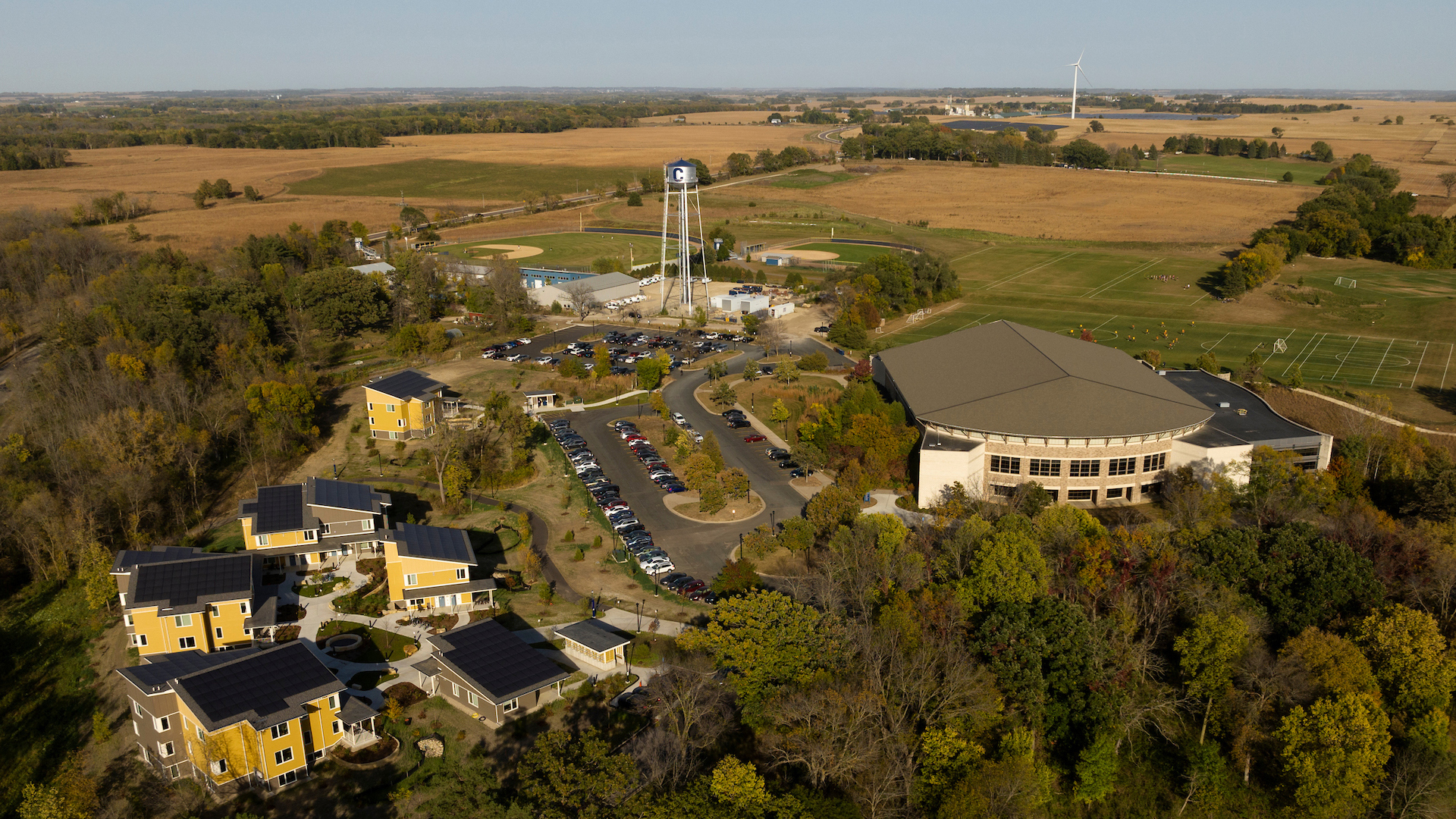
Currently, I serve as the director of sustainability at Carleton College, a liberal arts college in Northfield, Minnesota. Carleton has been ranked among the top five US colleges and universities working to reduce their operational greenhouse gas emissions. The Sustainable Futures Framework in our strategic plan lays out our commitment to educating our students about sustainability and environmental justice, including by working with community and Indigenous partners to address local climate change issues.
My own academic career and path into climate work began with my graduate work on the geochemistry of glaciers in the dry valleys of Antarctica, the Cascades, and the Cordillera Blanca range in Peru. My colleagues and mentors were interdisciplinary climate scientists at the Byrd Polar and Climate Research Center, and my experiences instilled in me a strong belief in the importance of knowing and raising awareness about the changes happening to our planet.
When I first started teaching about global climate change, I focused on the how, what, and why of climate science. I had my students analyze trends in greenhouse gas emissions data and explore what certain climate scenarios might mean for society. We studied examples of communities disrupted by coastal flooding and devastating crop losses. I wanted to give my students a breadth of exposure to the drivers of climate change and the consequences society would need to address. But in reviewing students’ midterm reflections on the course, I learned a disheartening truth: students said they felt very depressed and anxious. One student asked, “Isn’t there something we can do? Is there any hope?” This was a turning point for me.
Dismayed by my students’ feedback, I scrapped the second half of my syllabus and developed a climate solutions project, for which students had to explore actions for reducing greenhouse gas emissions or helping the community adapt to climate impacts such as flooding and heat extremes. I invited campus and community sustainability and climate professionals to discuss their work with the class. Guest speakers included a paleoclimatologist studying ice cores to find evidence of extreme climate events in history; a grounds manager working to cut back on summer watering needs; and a city stormwater manager considering how to reduce storm runoff that could overflow the sewer capacity and release pollution into the local river.
After learning about these kinds of environmental work, students collaborated in small teams to create interactive climate information projects that they later presented at a community center. One group’s project showed how landscapes with long-rooted native plants effectively absorb rainfall, thereby reducing sewage runoff. The group made a Plinko-style pegboard down which audience members could slide discs symbolizing raindrops. The students explained how warming global temperatures are increasing spring rain and flooding but that upstream land decisions can reduce and slow runoff. One side of the Plinko board was labeled “paved” and had only a few pegs on it. The other side was labeled “native plants and trees” and had many pegs. As rain drops slid down the paved side, they rapidly flew into the “stream” at the bottom of the board. On the plants and trees side, the drops traveled more slowly down to the stream. The students also provided information on the large roots of plants and the capacity of some vegetation to be especially spongy.
The climate solutions project changed the tone of the course, inviting students to connect with environmental experts and strategies that excited them. Hard-to-tackle challenges, like flooding, are fruitful topics for student collaboration, because finding solutions often comes with creative exploration. Most important, the project allowed students to cultivate hope about the future of the planet.
Another reason the course redesign was successful was that the focus on solutions intentionally helped students learn and practice climate literacy.
A guide from the United States Global Change Research Program (USGCRP), Climate Literacy: Essential Principles for Understanding and Addressing Climate Change, lays out ways to cultivate climate literacy in learners.
However, in a move that could cripple important work to inform strategic climate decisions for the country, in April 2025 the Trump administration cut funding to the USGCRP and deleted information from the program’s website, including the climate literacy guide. Educators can still go to https://lunacreates.com/project/climate-literacy-guide/ to access the guide, which describes what a climate-literate person should be able to do:
- Understand Earth’s climate system and the options to address human-caused climate change.
- Recognize and know where to find credible information about climate change.
- Communicate about climate change in accurate and effective ways.
- Make informed decisions about climate change.
We must teach these skills to our students. While most of our graduates will not become climate researchers, many will have opportunities to integrate climate solutions into their future professional work, from supporting businesses in financial risk decisions and developing technology solutions to providing health and social services.
At Carleton, our strategy to educate students about climate change involves broad collaboration and experiential learning projects. Geology faculty, for example, have engaged students in analyzing campus soil, water, and the physical properties important to the functions of geothermal wells. Other students have explored the physics that drive renewable energy systems. Carleton’s arboretum serves as a critical field site for ecology and biology coursework as well as for community-engaged projects that contribute to local environmental decisions and connect students to local history and land management.
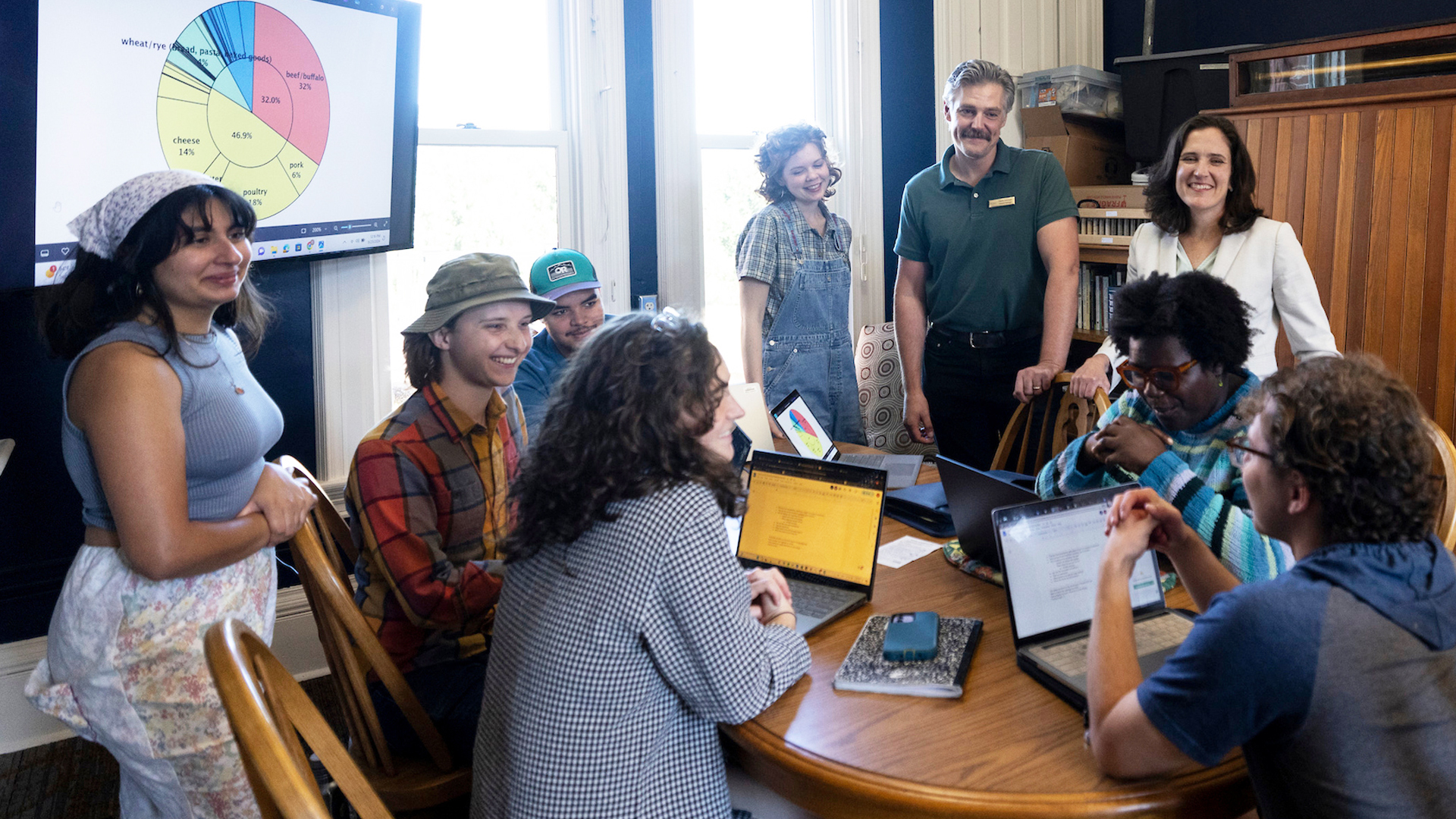
As director of sustainability at Carleton, I supervise and mentor eight to twelve students, who each serve as a sustainability peer leader. The students I hire for this work study position hail from various majors and work in teams to develop and support projects that advance climate resilience on campus and in the community. This past year, sustainability leaders have helped analyze charger data from electric vehicles in the campus fleet. They have collaborated with student environmental clubs and helped a custodial team audit stream contamination. They also hosted a radio show that engages faculty, staff, and students in sharing strategies for staying optimistic while doing climate work.
Other examples of incorporating climate lessons into a variety of disciplines come from early in my career. In one instance, a colleague invited me to speak to her English class about climate tipping points and extremes. Students then read literature focused on a climate apocalypse and reflected on the importance of environmental awareness and action.
Another colleague sought my advice about including the topic of climate change in his chemistry courses. After many discussions, we realized that some of the analytical concepts he taught students were relevant to climate change, and he decided to help students understand how atmospheric carbon emissions are driving ocean acidification. He created a lab activity for which students titrated water, observing color changes as they shifted various forms of carbon from carbonate to bicarbonate. This hands-on exercise allowed him to show how increasing atmospheric emissions are reducing carbonate availability in the ocean, thereby hindering shell formation in marine organisms.
These kinds of learning experiences are transformative for students, yet they are not widespread across higher education. Introductory courses are an especially important place for instructors in any discipline to incorporate activities that help students understand the climate crisis or improve their capacity to act. However, infusing climate literacy into disciplines that don’t specifically address environmental issues or sustainability can be tough. Many instructors are also uncomfortable teaching polarizing topics, which certainly include climate change.
Professional development can overcome some of these challenges and teach faculty new frameworks and pedagogical approaches that emphasize active learning to prepare students to address climate change. Professional organizations can provide resources for campuses. The Association for the Advancement of Sustainability in Higher Education offers frequent webinars related to sustainability literacy in both the curriculum and the cocurriculum. Likewise, the Upper Midwest Association of Campus Sustainability has offered coffee chats, book groups, and retreats that support learning and discussions needed to improve climate education. The Foundation for California Community Colleges has committed significant resources to its Center for Climate Futures to support environmental education and workforce development around climate solutions, such as restoring fire-resilient forestry.
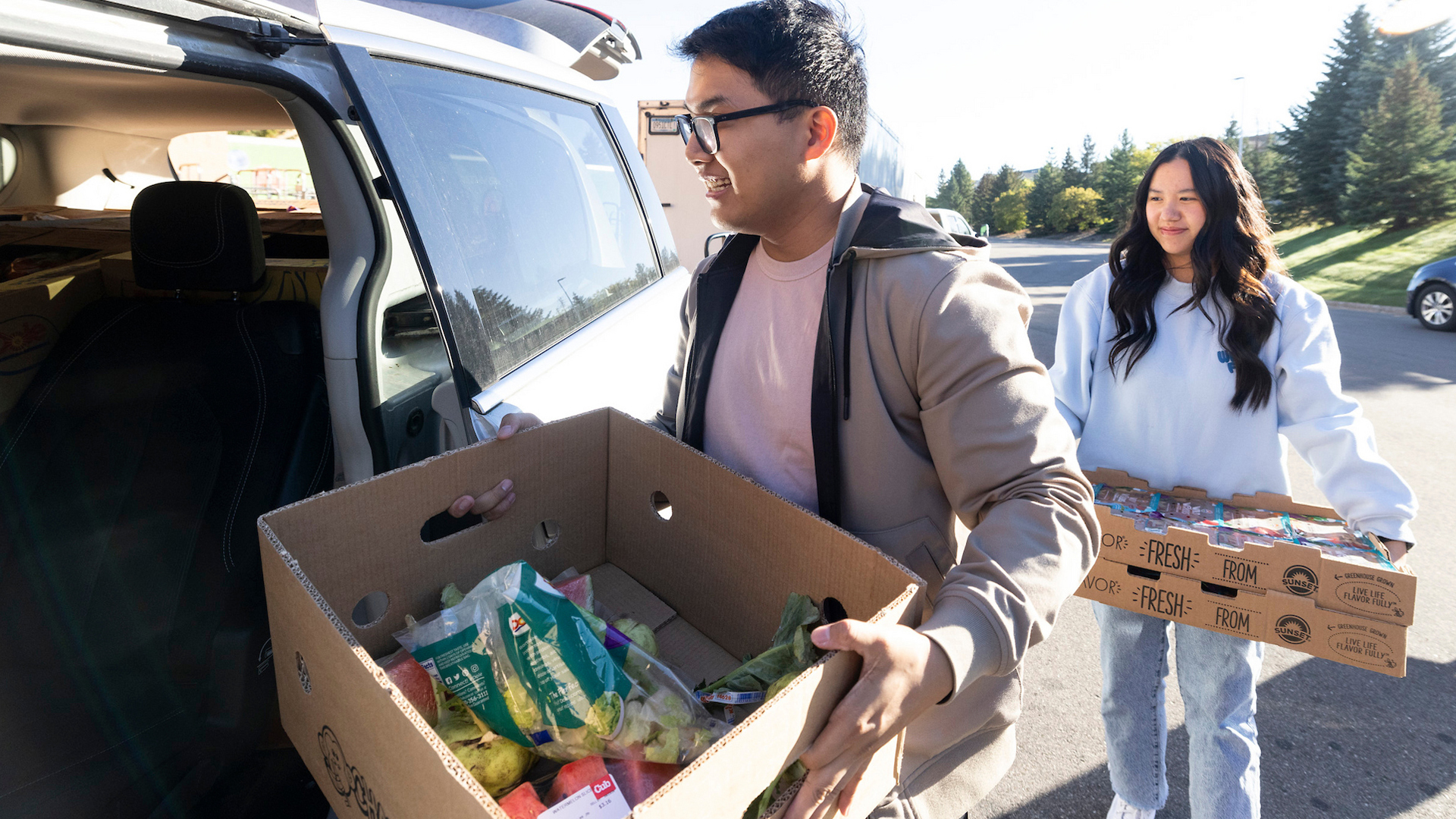
Collective action can and should happen locally. When the city of Northfield developed its 2019 climate action plan, Carleton College contributed expert input. The college continues to provide support as the plan becomes a reality and has also connected students to related projects. Carleton’s annual student move-out sale, “Lighten Up,” for instance, recovers clothes, bikes, and dorm items for a three-day sale held in the football stadium. The sale usually generates thousands of dollars for local nonprofits and boosts goodwill between the campus and community. Likewise, Carleton and neighboring St. Olaf College both have student-run programs that recover leftover food from campus dining halls and local grocery stores and then pass it on to a local food bank and youth center, thereby reducing hunger and waste.
Carleton also holds sustainability tours and workshops, during which participants learn about our wind, solar, and geothermal energy systems and how individuals and organizations can adopt their own sustainability efforts. In 2024, Carleton energy manager Rob Hanson led more than three hundred visitors on basement tours to see the geothermal heating units that have helped the college reduce its carbon footprint. During Northfield Earth Day, Carleton students held informational events on water health, flood resilience, and ways individuals can support climate action on an individual level, such as weatherizing their homes, reducing food waste, and volunteering with local conservation groups.
During the 2024 elections, one of the local ballot measures was a three-part referendum to “Reimagine Northfield High School.” Part one involved sustainability and safety upgrades and expansion of classroom space. Part two involved building a new gym. Part three had to do with the creation of a geothermal system that would replace the need for natural gas and reduce the school’s carbon emissions. Breaking up the referendum gave the school a better shot at attaining at least one of the upgrades. Before the election, Carleton offered to contribute $2 million to the upgrades even if only the first part of the referendum passed. Our president shared this news at a community forum held at the school. Subsequent events built awareness of what each upgrade entailed and would mean for the future conditions at the school. In the end, Carleton’s contributions to the public outreach paid off: in November 2024, all three parts of the referendum passed.
A Climate Action Week event I attended in 2024 clarified just how important campus-community partnerships are in making progress on environmental challenges. During a panel discussion, Scott Wopota, the executive director of the Community Action Center (CAC), described how the CAC successfully completed an affordable and sustainable housing project in Northfield. Scott told the audience that because he’d seen Carleton College carry out its climate action plan, he knew that it was possible to make sustainability part of CAC’s affordable housing work—and that as heating and energy costs rise, sustainability will improve affordability, even as it helps reduce greenhouse gas emissions.
Ultimately, the urgent imperative for higher education is to empower students to navigate and innovate solutions for the climate crisis. This demands not just new courses or operational shifts but a fundamental commitment to collaborative problem-solving—within all disciplines, across them, and most important, with our surrounding communities, where we engage equitably and build trust. Every individual and institution can strengthen the capacity of our students to know and act. We must demonstrate how academic expertise, practical application, and community knowledge can together forge the climate-resilient and equitable future we need.
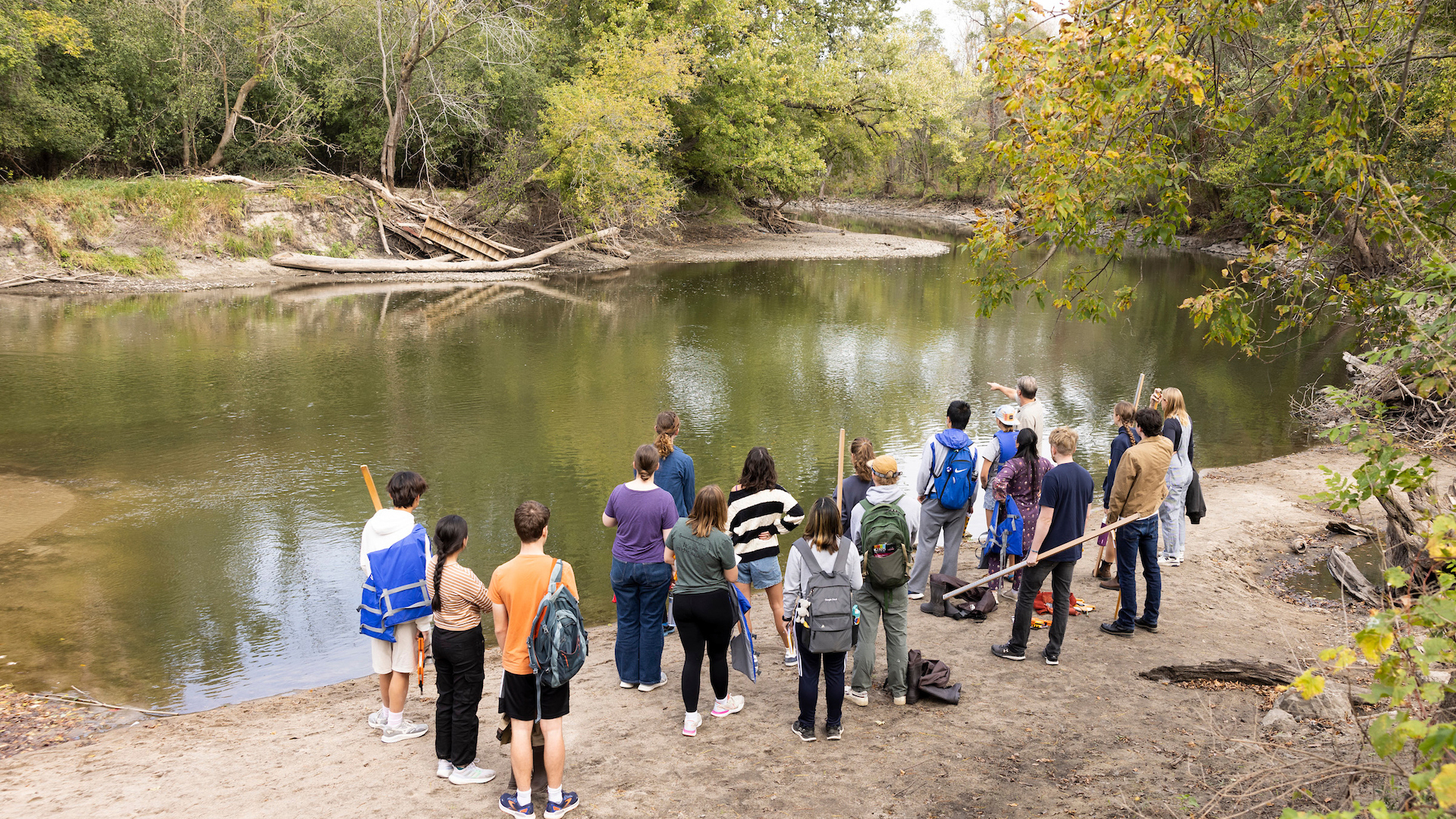
Lead photo: Students work with arboretum director Nancy Braker (center) at Carleton College. (Ackerman + Gruber)
Exclusive Content