Conference on Learning and Student Success
Developing a Strong Proposal
The call for proposals is closed.
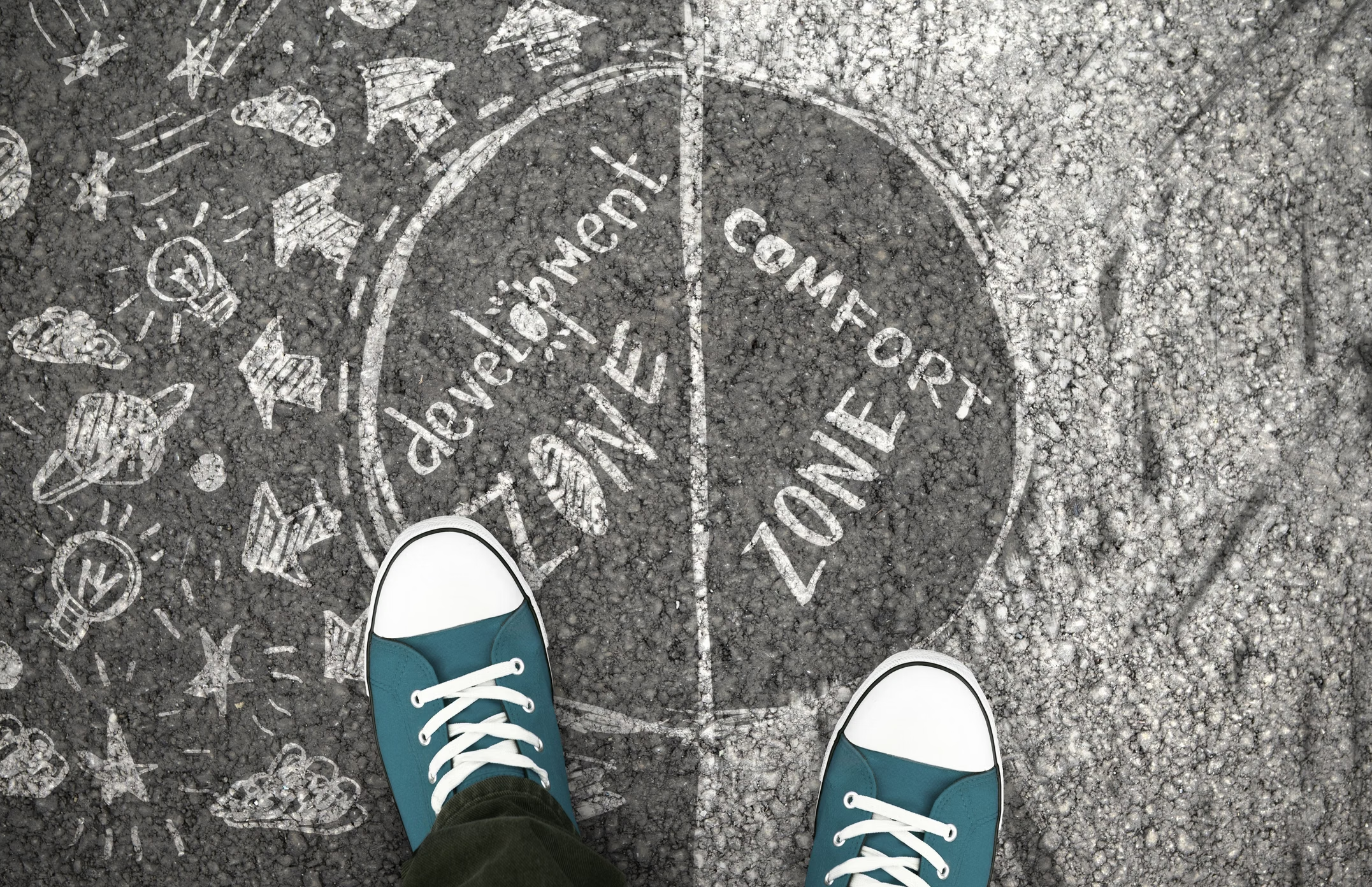
Push Yourself and Propose
What does it take to initiate, lead, and sustain institutional change and transformation? How can the silos that prevent effective collaboration within and among institutions be broken down? How can research-based, high-impact practices be brought to scale so they benefit all students? What approaches to measuring student learning and success also yield evidence that can be used to demonstrate the value of the college degree? Which practices and strategies truly value student diversity, lead to the elimination of inequities in student outcomes, and successfully promote student belonging? Where can you discover the latest curricular, pedagogical, and digital innovations? Help shape the community-generated program by submitting a proposal exploring these and other urgent questions.

Elements of a proposal:
Presenter contact information.
Session Title, Modality (in-person or online), Track, Session Type, and Level of Session Expertise (beginner, intermediate, or advanced).
Proposal Summary:
- Description for the program (1500 characters)
- Expected learning outcomes/key takeaways
- Background and evidence (250 words)
- Plan for participant interaction (100 words)
- 3-5 keywords that summarize your topic
We invite proposals that bring this year’s theme—together by design—to life within one of the following conference tracks, which are designed to highlight both core practices and emerging opportunities:
- AI and Digital Innovation: This track features sessions that highlight evidence-based approaches to leveraging digital innovations—such as artificial intelligence, open learning practices, ePortfolios, and other emerging technologies—to enhance student learning and success across the curriculum and co-curriculum.
- Assessment and Measuring What Matters: This track presents innovative assessment strategies, meaningful evaluation frameworks, and evidence-based approaches that capture authentic student learning and institutional effectiveness.
- Cultivating Success Across Diverse Student Realities: This track recognizes that learners arrive with distinct histories, responsibilities, and aspirations and examines current support systems while advancing new, asset-based approaches for populations underserved by higher education.
- Educational Development and Pedagogical Innovation: This track showcases cutting-edge faculty development strategies, innovative teaching methods, and pedagogical research that enhance educator effectiveness and student learning outcomes.
- General Education and Curricular Innovation: This track explores emerging trends in general education (re)design, interdisciplinary ways of knowing, and curricular reform that prepare students for work, life, and citizenship.
- High-Impact Practices (HIPs): This track examines how institutions design and implement evidence-based high-impact practices (HIPs) and other experiential learning opportunities, and ensure that these programs are accessible to and deliver high value for every learner.
- Undergraduate Education for All in a Changing Societal Landscape: This track investigates how an evolving policy landscape and public debate about the purpose and value of higher education itself shapes the student experience—and what institutions can do to ensure progress and persistence amidst significant change.
Session Types
Session length varies; please see individual session type descriptions for more information.
Provide colleagues time to explore current work, recent findings, and/or new perspectives. Facilitators start conversations with brief presentations, then lead 20-25 minutes of discussion. Proposals should set context, identify target audience, and focus on exploring new perspectives and strategies. (60 minutes)
Moderated sessions featuring exploratory, cutting-edge advances in work promoting learning and student success. Presentations with promising, yet minimal outcome data encouraged. Must include time for audience questions/discussion/interaction. Two sessions per 60-minute slot. (20 minutes presentation with 10 minutes discussion)
Follow a traditional format that allows for conversation with up to five panelists on a topic relevant to a conference track; panelists should offer different perspectives on the topic—e.g., institutional, professional role, programmatic, curricular, cocurricular, and disciplinary. (60 minutes)
Pecha Kucha ("chit chat" in Japanese) sessions combine visual and oral presentations to convey creative endeavors, research findings, or activities related to conference tracks. Format: 20 slides, 20 seconds each (6:40 total), designed to articulate key elements. Three sessions per 60-minutes slot. The following link provides an overview and guidelines for designing a Pecha Kucha presentation: http://avoision.com/pechakucha.
Share visual models of research findings, course/program designs, concept maps, assessment rubrics, faculty development programs, design thinking frameworks, and/or high-impact practices. Poster sessions provide opportunities for presenters to discuss practical applications with attendees (60 minutes)
Facilitate an informal discussion around effective practices or programs and provide opportunities for attendees to share their successful strategies, questions, and concerns. Attendees are welcome to rotate among several discussion topics or to focus on one only. There will be no A/V provided for in-person roundtables. (60 minutes)
An interactive opportunity to bridge theory and practice focusing on programs and/or approaches to student learning and success. Facilitators must provide supporting theories, scholarship, and evidence for their work and engage participants in critical reflection, discussion, and/or design work. (60 minutes)
Successful proposals will do one or more of the following:
- explicitly connect to the twin pillars of "learning" and/or "student success";
- present solutions developed by educators bridging institutional siloes (e.g., student affairs and academic affairs);
- showcase evidence-based models that have proven effective in creating coherent, purposeful undergraduate experiences for all students, or represent models that emerged rapidly over the past year and for which a case can be made that the models are likely to prove effective through empirical inquiry over time;
- offer creative, novel, and transformative mechanisms for designing the undergraduate experience;
- highlight collaborative projects involving more than one author/presenter;
- showcase models that connect research and scholarship with effective courses, curricula, co-curricula, pedagogies, assessment practices, and campus cultures that engage all students in high-quality learning experiences;
- meaningfully include student voices and perspectives, including but not limited to students as co-presenters and co-designers of their educational experiences;
- include explicit plans for involving participants in reflection, discussion, exercises, and other activities that will help them understand and apply the material; and
- reflect a range of perspectives, innovations, disciplines, and strategies for change.

Questions about #AACUCLASS?
If you have questions about the 2027 AAC&U Conference on Learning and Student Success or would like additional information, please email us at CLASS@aacu.org.