
Science Is Ours
Higher education leaders must shield research universities from partisan politics
⚠️ You have free article remaining.
Log in or become a member for unlimited access.
Consider for a moment the sheer scope of human progress over the past century. We have moved from a world in which a simple infection was a death sentence and extreme temperatures dictated where populations could live to an era defined by previously unimaginable longevity, health, and comfort. Indoor plumbing eradicated waterborne disease, widespread electrification banished the dark, and smartphones now seamlessly connect people to the global economy and a vast store of information. Yet none of these breakthroughs emerged from a political think tank, and few were born in corporations. They are products of scientific inquiry that began in laboratories at the United States’ research universities.
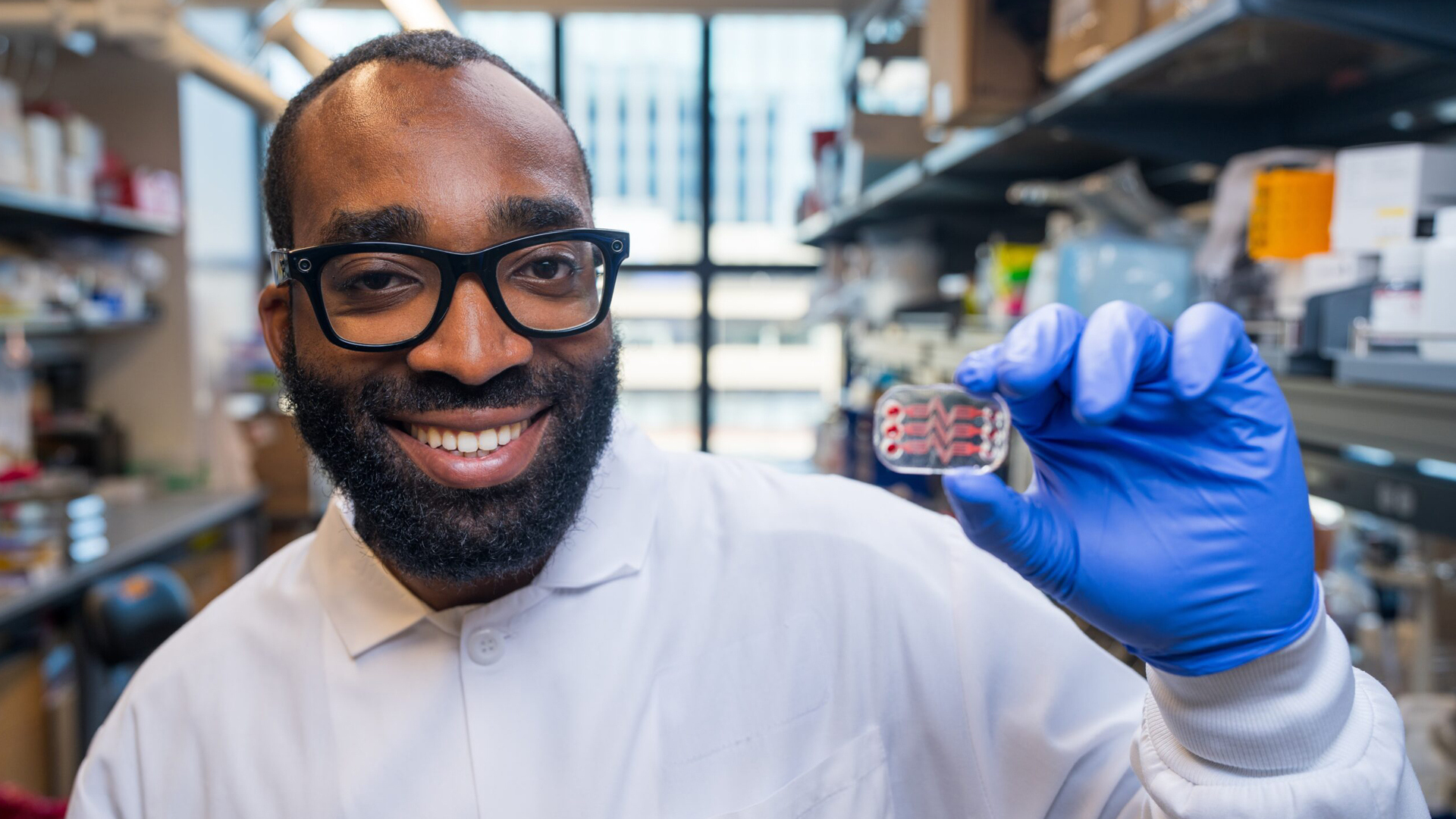
Today, scientific progress is saving lives in real time. I have witnessed its impact firsthand. The Wyss Institute for Biologically Inspired Engineering at Harvard University, which I founded and direct, has launched more than seventy companies and produced multiple transformative technologies. These include an FDA-approved medical device that calms erratic heart rhythms and normalizes the breathing of opioid-exposed infants; the CRISPR technology behind the first gene therapy used to reverse sickle cell disease; and human organ chip technology, which the FDA and pharmaceutical companies are now using to accelerate drug development, reduce animal testing, and help produce therapies that are safer, more effective, and less costly.
The scientists who developed these innovations do not choose their research questions based on partisan ideology. Yet today, if you scroll through social media or turn on a cable news channel, science has become another front in America’s culture wars. Research universities face mounting political attacks, and the federal government is slashing research funding. Meanwhile, politicians, political groups, and others are increasingly dismissing scientific expertise as partisan and calling into question long-standing investments that made the United States the world’s scientific leader.
US scientific innovation did not happen by accident. It was built over decades through sustained public investment, academic freedom, and a national commitment to discovery. Those foundations are now under serious strain, placing at risk not only future breakthroughs but also the nation’s health, prosperity, and global competitiveness. In response, college and university leaders must defend not only the freedom to pursue scientific discovery but also the public value of the research their institutions produce.
Whether you live in a rural Texas farming community or a technology hub outside Boston, science affects far more than your health. It is the invisible engine that drives the economy and helps determine your financial future. Government investments in basic research have been responsible for almost 25 percent of all US private-sector productivity growth over the past seventy-five years. Economists estimate that ending this funding would reduce our nation’s gross domestic product by about 4 percent. This would significantly lower tax revenues due to reduced income and employment and decrease the wealth of the average US taxpayer by roughly $10,000.
Scientific research played a key role in the United States’ historic rise to economic dominance. We were the nation that mastered mass production, split the atom, mapped the human genome, and first landed on the moon. Every major economic boom in our history has been preceded by a breakthrough in basic research. If we treat science as a luxury or a partisan battleground rather than a national investment, we risk handing the keys of the future to our global competitors.
Reasonable people can disagree about the size of government, but everyone should want public dollars invested wisely. That means acting like smart investors when it comes to making decisions about where budget cuts are made. If you had an investment that returned $2.50 for every $1.00 you invested, would you walk away from it? This is precisely the return generated by the National Institutes of Health’s investments in US research laboratories. Government research funding at the Massachusetts Institute of Technology (MIT) alone has generated more than 30,000 new companies, 4.5 million new jobs, and nearly $2 trillion in annual revenues. MIT is just one example of how research universities have powered the innovation engine that has kept the US economically competitive for generations. As China dramatically expands investments in scientific research, continued cuts to US research funding threaten that enduring advantage.
Some politicians and members of the public perceive our universities as elite, making it all the more important for higher education leaders to explain how they serve society. US colleges and universities are beacons of opportunity that attract talented students from across the nation and around the world, often regardless of financial means. They become the scientists, inventors, and entrepreneurs who create breakthrough technologies and build the industries that keep the United States competitive. As our government reduces funding for scientific research, other nations are rapidly increasing their investments. China is investing billions of dollars in artificial intelligence, quantum computing, and biotechnology because its leaders understand that whoever owns the science owns the century.
But the challenge extends beyond funding levels alone. It also involves who gets to decide which scientific questions are worth pursuing. On May 29, 2026, the White House, through the Office of Management and Budget, proposed a sweeping rule to implement President Donald Trump’s Executive Order on Restoring Gold Standard Science. Among its provisions, the proposal would give political appointees final approval over research grants and direct reviewers to consider an applicant’s history of “questionable” memberships or affiliations.
History offers a cautionary lesson about allowing political ideology to shape scientific inquiry. In the Soviet Union, political leaders rejected modern genetics in favor of ideology, a decision that prevented research that could have increased agricultural yields and that ultimately contributed to widespread famine. When political loyalty replaces scientific merit as the standard for research, both science and society pay the price.
If we, as higher education leaders, stand by while our government dissolves its partnership with research universities that power the country’s innovation economy—and if we fail to make the public case for scientific research—we may be making one of the worst decisions of our lives. That case should not rest on blind faith. Science thrives on skepticism, but that skepticism must be grounded in a willingness to examine the evidence and respect the facts. People do not have to agree on every political philosophy or tax policy to recognize that clean water, reliable electricity, effective medicine, and a resilient food supply benefit everyone. But if ideology consistently outweighs evidence in shaping scientific policy, we must clearly explain what is at stake: the research enterprise that’s long been one of the nation’s greatest sources of health, prosperity, and global leadership.
The next time you see science being used to divide us, look at the world around you. Look at the smartphone in your hand, the air conditioner keeping your home cool, or the prescription bottle helping a loved one stay alive. Science is not “theirs.” It is ours. It is a profoundly human endeavor, and one of America’s greatest strengths.
Going forward, higher education leaders must help the public understand that scientific research is not a partisan cause but a national asset. Doing so can help rebuild public trust and preserve the foundation that has made generations of US innovation and prosperity possible.
Lead photo: Wyss researchers developed a vibrating mattress to prevent breathing disruptions in infants. (Wyss Institute at Harvard University)
Exclusive Content