Membership Programs Meetings Publications LEAP Press Room About AAC&U
Association of American Colleges and Universities
Search Web Site
AAC&U
Resources on:
Liberal Education
General Education
Curriculum
Faculty
Student Success
Institutional Change
Assessment
Diversity
Civic Engagement
Women
Global Learning
Science & Health
PKAL
Connect with AACU:
Join Our Email List
RSS Feed
Facebook
Follow us on Twitter
LEAP Blog
LEAP Toolkit
YouTube
Podcasts
Support AACU
Online Giving Form
 
Liberal Education Winter 2013 cover image

Current Issue:
Winter 2013, Vol. 99, No. 1

Student Learning: What, Where, How

In exploring the diversity of teaching formats and strategies that different faculty members at different institutions use in a widely taken course, this issue raises questions about what, where, and how students learn in courses that are assumed to cover the same ground. Also included are articles on the genesis and history of PKAL, the Tony Blair Faith Foundation’s higher education work, findings from the Personal and Social Responsibility Inventory, helping students develop “habits of mind,” and best practices in serving students with learning and other disabilities.

BUY NOW


CONTENTS:

FROM 1818 R STREET, NW

President’s Message
Did You Know? Employers Do Not Want Narrow, Illiberal Learning!
By Carol Geary Schneider
Policy leaders seem to think that they need to eviscerate the liberal arts in order to grow the economy. But what do employers themselves actually say about their own priorities for the kinds of learning that college students need to succeed in today’s innovation-fueled economy?

From the Editor

News and Information

FEATURED TOPIC

Three Colleges’ Different Approaches Shape Learning in Econ 101
By Dan Berrett
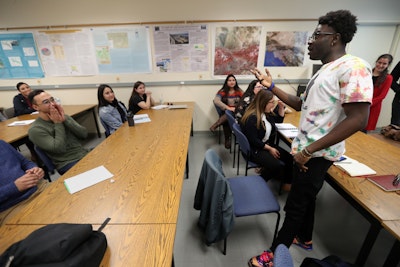
A semester-long experiment of auditing the same course at three institutions made it clear that it is not safe to assume students will learn the same thing just because a course has the same title. What matters most are a course’s unspoken attributes that colleges rarely make plain and about which students almost never ask.

Two Reactions

Holding Courses Accountable for Competencies Central to the Degree
By Carol Geary Schneider
Students’ competency development is a responsibility that cuts across many courses and many levels of expected student proficiency. To put it differently, it takes a curriculum, not just a course, to foster the competencies almost everyone now considers “essential.”

How Technology Matters to Learning
By Stephen C. Ehrmann
Technologies have no direct impact on learning outcomes. But if faculty and students use them to make it easier to do something educationally powerful—activities such as flipping pedagogy or offering different kinds of instruction to different students—those activities can improve learning.

THE PKAL PERSPECTIVE

The Theory and Practice of Transforming Undergraduate STEM Education: Reflections from the PKAL Experience
By Jeanne L. Narum
Changes that “stick” are carried out by academic departments, energized by faculty leadership and colleagueship, in a complex interplay that recognizes and understands local missions and
local constraints, while keeping an eye on high standards set by the national STEM community.

PERSPECTIVES

Faith and Globalization: The Challenge for Higher Education
By Tony Blair and Craig Bardsley
Students, the leaders of tomorrow, must be equipped with the knowledge and skills to make effective decisions in a complex, multi-faith world, and they must be comfortable working with people of diverse backgrounds.

Creating and Assessing Campus Climates that Support Personal and Social Responsibility
By Robert D. Reason
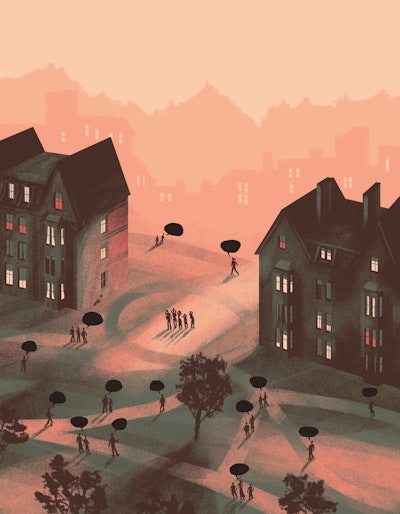
The more a college or university can do to create a campus climate that supports students in the development of personal and social responsibility, the more the institution can expect students to develop along these dimensions.

Cracking Open the Curriculum: Lessons from a Community College
By Chad Hanson and Patrick Amelotte
Through careful planning, sound choices, and frank conversations, the community college holds the potential to make good on the promise of the arts and sciences.

Critical Habits of Mind: Exposing the Process of Development
By Jennifer Fletcher
Despite agreement among scholars about the meaning and value of habits of mind, these dispositional practices largely remain in the shadows of college instruction.

MY VIEW

My Learning Curve on Learning Disabilities
By Christopher Ames
Working innovatively to serve students with disabilities not only contributes to the powerful social goal of unlocking the often stifled intelligence and creativity of students who learn differently and face significant obstacles in traditional educational settings, but it also has the potential to stimulate pedagogical innovation in ways that can help all students learn.

spacer