2026 North Carolina PKAL Regional Network Meeting
Promoting Pathways through STEM
Virtual Event
April 10, 2026
–
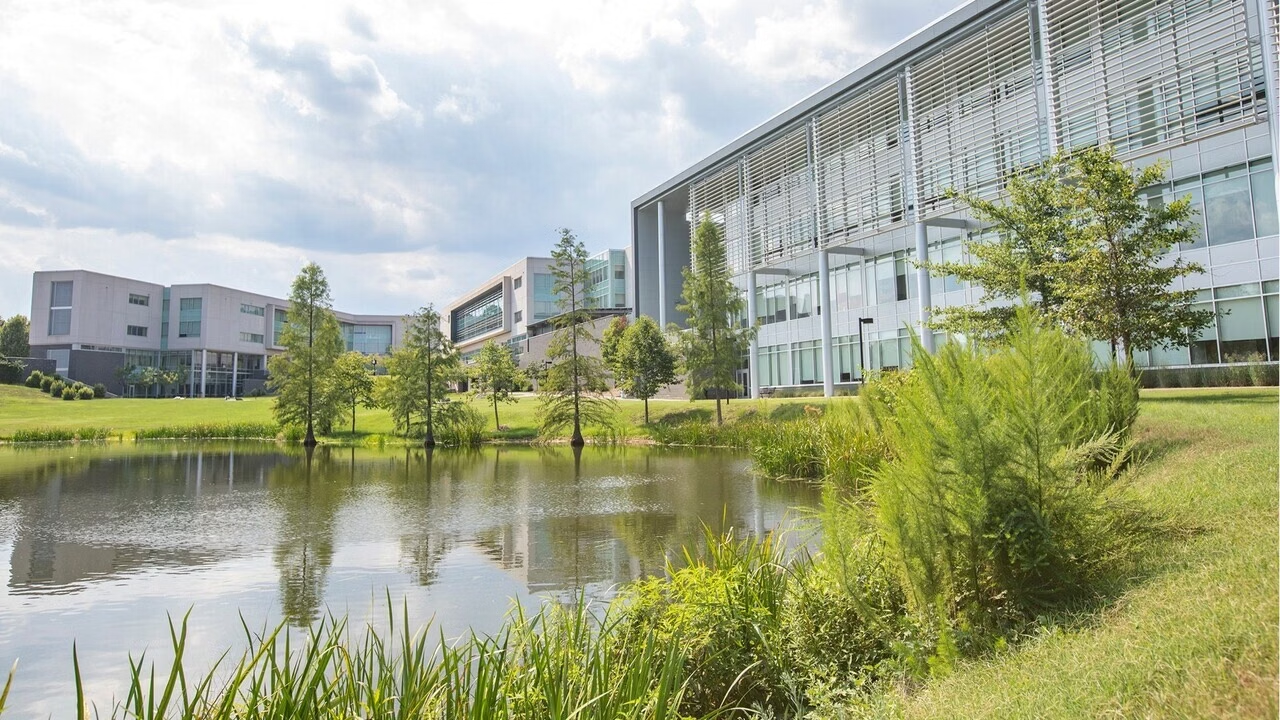
Hosted by Wake Technical Community College
Overview
The Project Kaleidoscope (PKAL) Regional Networks provide low-cost, effective professional development opportunities for STEM faculty and administrators to foster a caring community, explore and advance modern undergraduate STEM pedagogies, disseminate findings from undergraduate STEM research and practice, and promote STEM faculty career advancement. The North Carolina PKAL Regional Network welcomes all faculty and administrators from public and private 2- and 4-year higher education institutions to attend its upcoming Regional Network Meeting.
Meeting Theme
This Regional Network Meeting will explore current work in promoting student success and ideas for creating and maintaining pathways through STEM. In an increasingly interconnected and AI-driven world, the undergraduate STEM education landscape includes barriers to student success but also opportunities for promoting pathways through STEM. This work recognizes and addresses barriers to success and how to support students in overcoming them. Through collaborative sessions, we will share and discuss ideas and strategies for supporting all students in STEM. Attendees will discuss innovative strategies for STEM teaching while addressing issues such as presence, quality, and the development of community partnerships. Together, we will explore how to harness technology’s potential while reinforcing the importance of empathy, reasoning, and community engagement in shaping the future of undergraduate STEM education. Click here to learn more about the schedule.
The keynote presenter is Dr. Catherine L. Quinlan, Ed.D., Brenda B. Brodie Endowed Chair in the School of Education at North Carolina Central University. Her presentation is titled “The Right Thing or The Symbolic Thing.”
Meeting Tracks
Track 1: Classroom Practices that Foster Engagement and Agency
This track highlights evidence-based teaching strategies that promote active learning, student ownership, and deeper engagement in STEM courses. Presentations may explore culturally responsive pedagogy, inquiry-based learning, collaborative problem-solving, and authentic assessment. Emphasis is placed on strategies that promote student confidence, identity, and persistence in STEM fields. Practical examples and outcomes are strongly encouraged.
Track 2: Departmental and Institutional Pathways to STEM Achievement
This track examines how departments and schools intentionally design systems that support student progression through STEM majors. Topics may include advising models, bridge programs, mentoring networks, research experiences, and curricular redesign. Contributors are encouraged to share collaborative and cross-unit initiatives that strengthen pathways from entry to graduation. The focus is on sustainable structures that institutionalize student success.
Track 3: Technology, Innovation, and Emerging Tools in STEM Pathways
This track explores how current and emerging technologies—including Generative AI—are reshaping teaching, learning, and student support in STEM. Topics may include AI-assisted instruction, adaptive learning systems, virtual labs, and ethical integration of technology. Presenters should examine both opportunities and challenges in leveraging technology to enhance access, engagement, and progression. The goal is to consider how innovation can strengthen inclusive STEM pathways.
Track 4: Identifying and Addressing Barriers to STEM Success
This track focuses on how faculty recognize structural, academic, and social barriers that impact student persistence and achievement in STEM. Discussions may include equity gaps, preparation disparities, financial constraints, and sense of belonging. Presentations should highlight data-informed strategies and inclusive practices that reduce obstacles and promote equitable outcomes. Emphasis is placed on actionable approaches that improve retention and completion rates.
Registration
Click HERE to register. Faculty and administrator registration is $75 per person. Postdoc/graduate student registration is $50 per person. The deadline to register is April 8, 2026.

Important Dates To Remember
Call for proposals opens.
Call for proposals closes.
Notices of acceptance released.
Registration closes.
NC PKAL Regional Network Meeting occurs.
North Carolina PKAL Regional Meeting Director
Your host for this meeting is Dr. Jackie Swanik. For more information about the meeting, please contact her directly.

Dr. Jackie Swanik
jtswanik@waketech.edu