Podcast
Wanjiku Chebet Kanjumba, University of Florida - Capturing Tumbling Satellites in Orbit
How do we capture tumbling satellites in outer space?
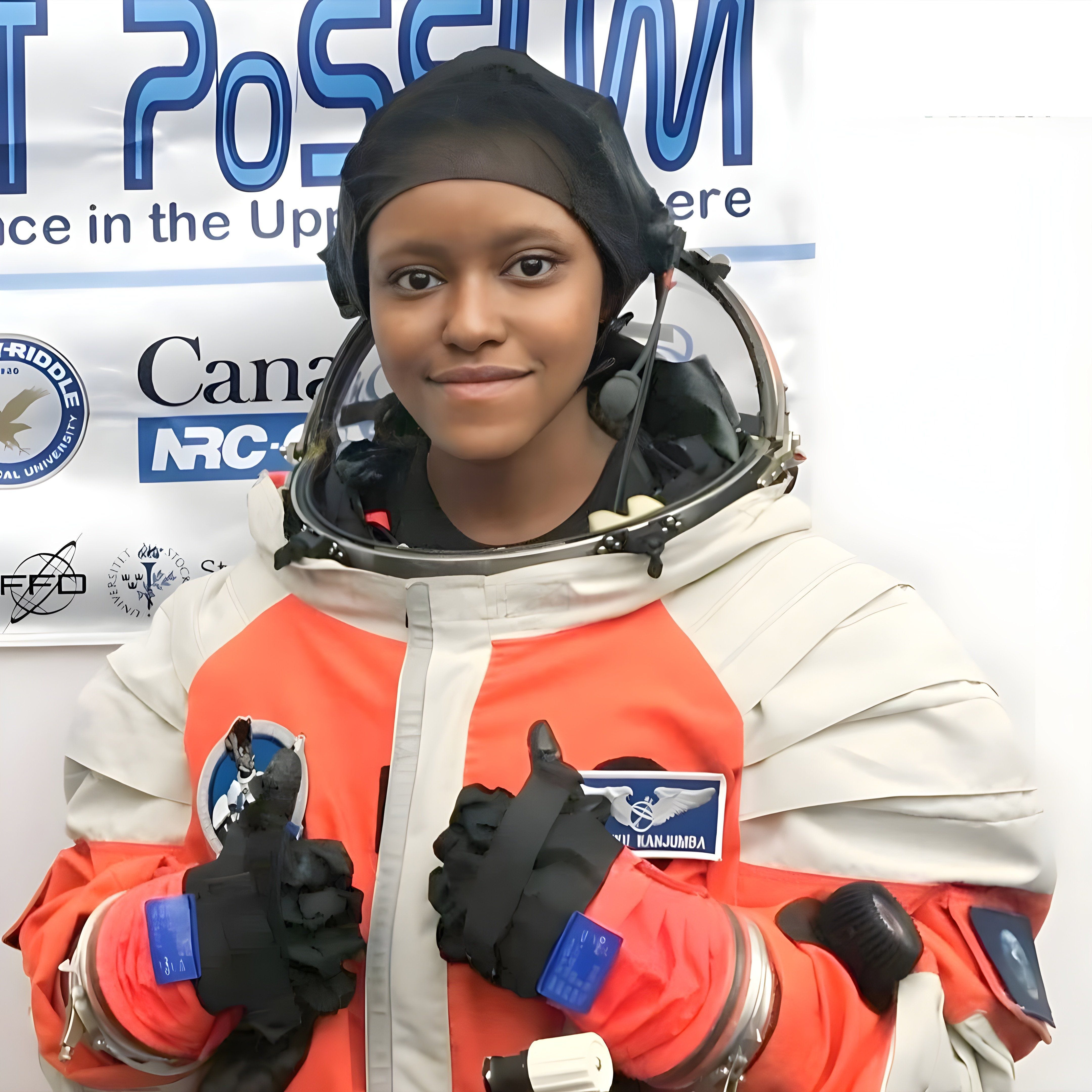
Wanjiku Chebet Kanjumba, PhD candidate in aerospace engineering at the University of Florida, looks at how to bring them under control.
Faculty Bio:
Wanjiku Chebet Kanjumba is a Ph.D. Candidate in Aerospace Engineering researching guidance, navigation, and control for spacecraft proximity operations, with a focus on capturing noncooperative and tumbling satellites. She is Co-founder and CEO of Vicillion Inc., an aerospace company, and serves as Director of Spaceport Developments and R&D Career Astronaut-Candidate at Titans Space Industries. She works on expanding equitable access to space, including launch infrastructure development in Africa.
Transcript:
Space surveillance networks track tens of thousands of human-made objects in orbit, and estimates put the number of debris fragments larger than a centimeter above one million. Among the larger objects are hundreds of intact satellites that have simply stopped working. Removing one before it breaks apart into new debris is not mainly a problem of reaching it. It is a problem of control.
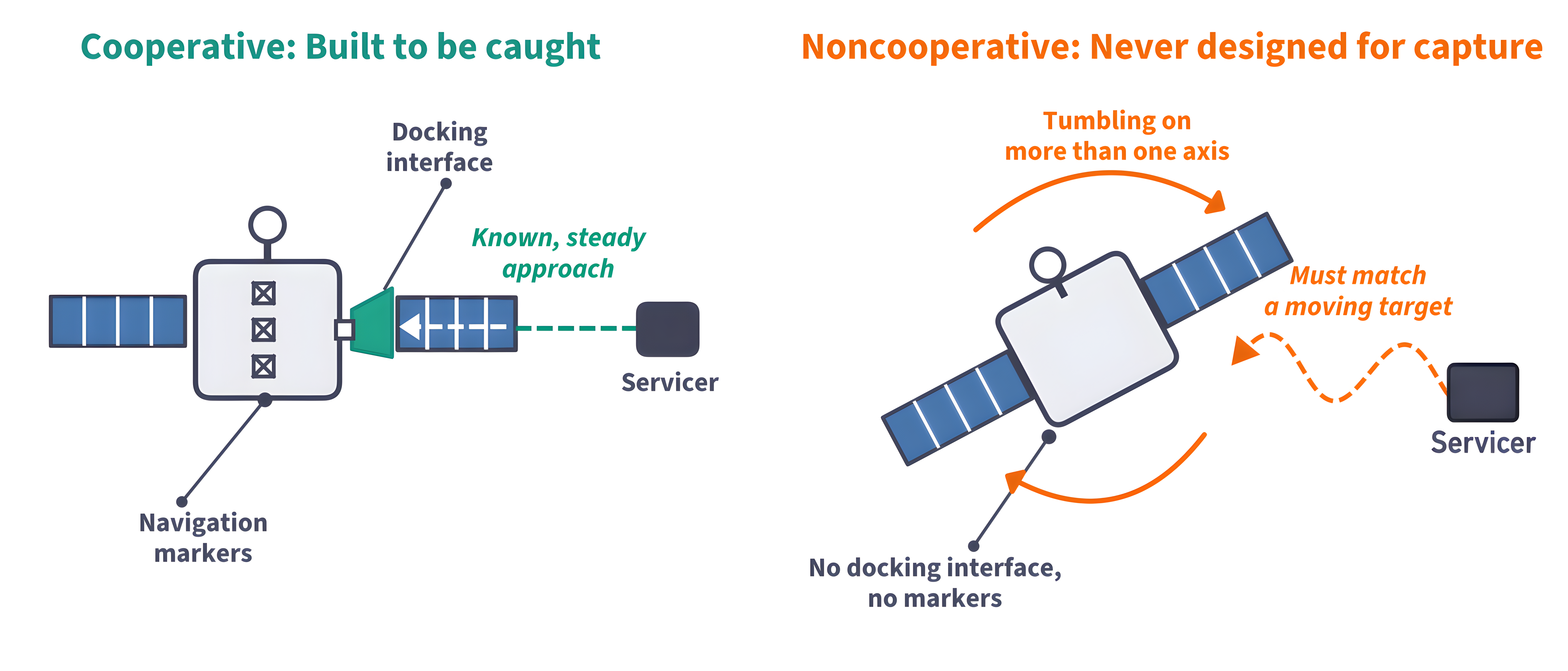
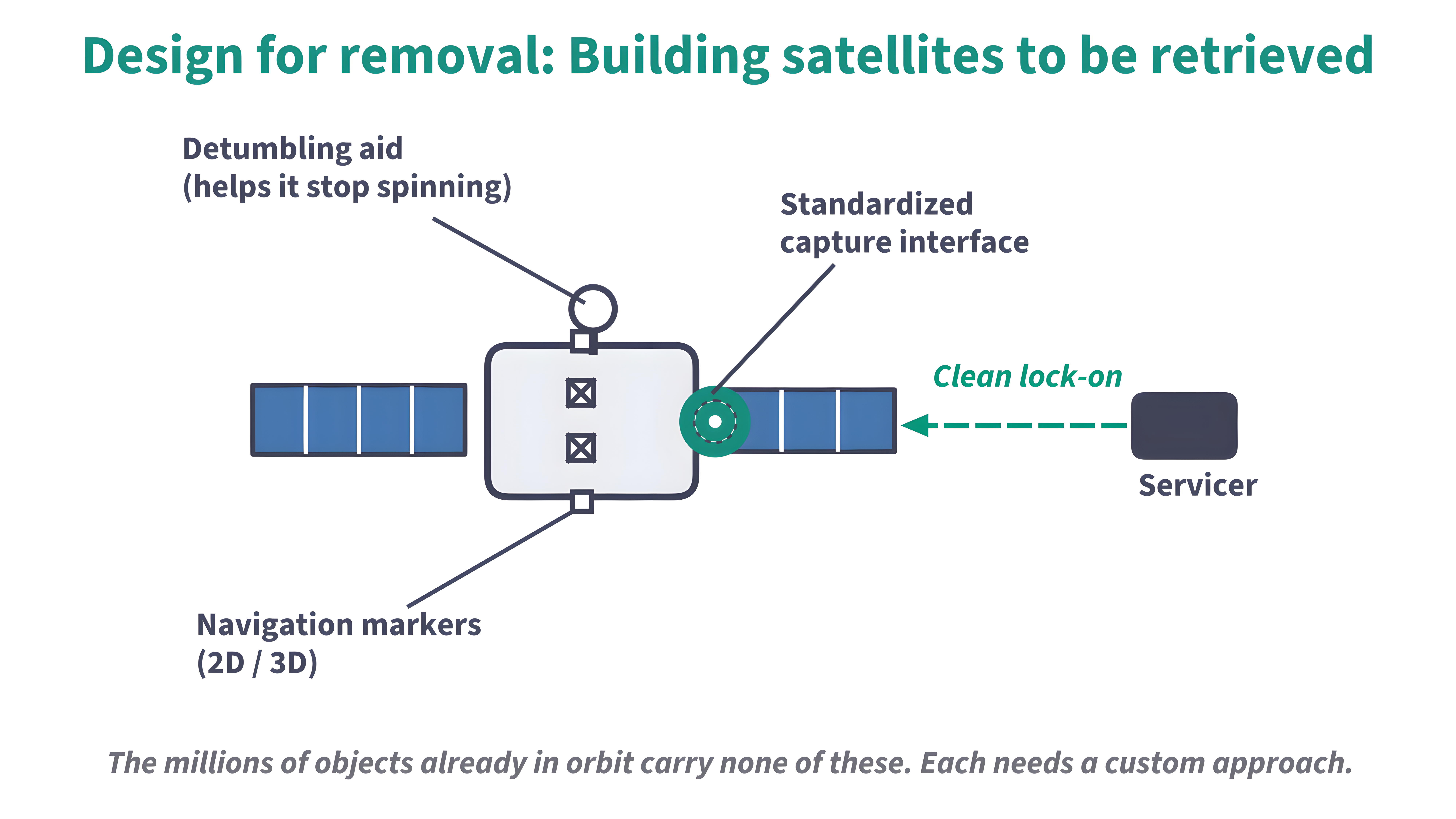
A servicing spacecraft is a robotic mechanic sent to refuel, repair, or relocate a disabled satellite, and it meets two very different targets. A cooperative satellite holds a steady orientation and carries a docking fixture and navigation markers, so the servicer has a known place to attach. A noncooperative satellite offers none of that. It may tumble, its mass and inertia may be poorly known, and its structure was never designed to carry the loads of capture.
Guidance and control designs have generally treated these cases separately. My work looks at developing a single framework for both, treating position and orientation as one coupled six-degree-of-freedom problem over steering them with separate controllers that can work against each other near the target.
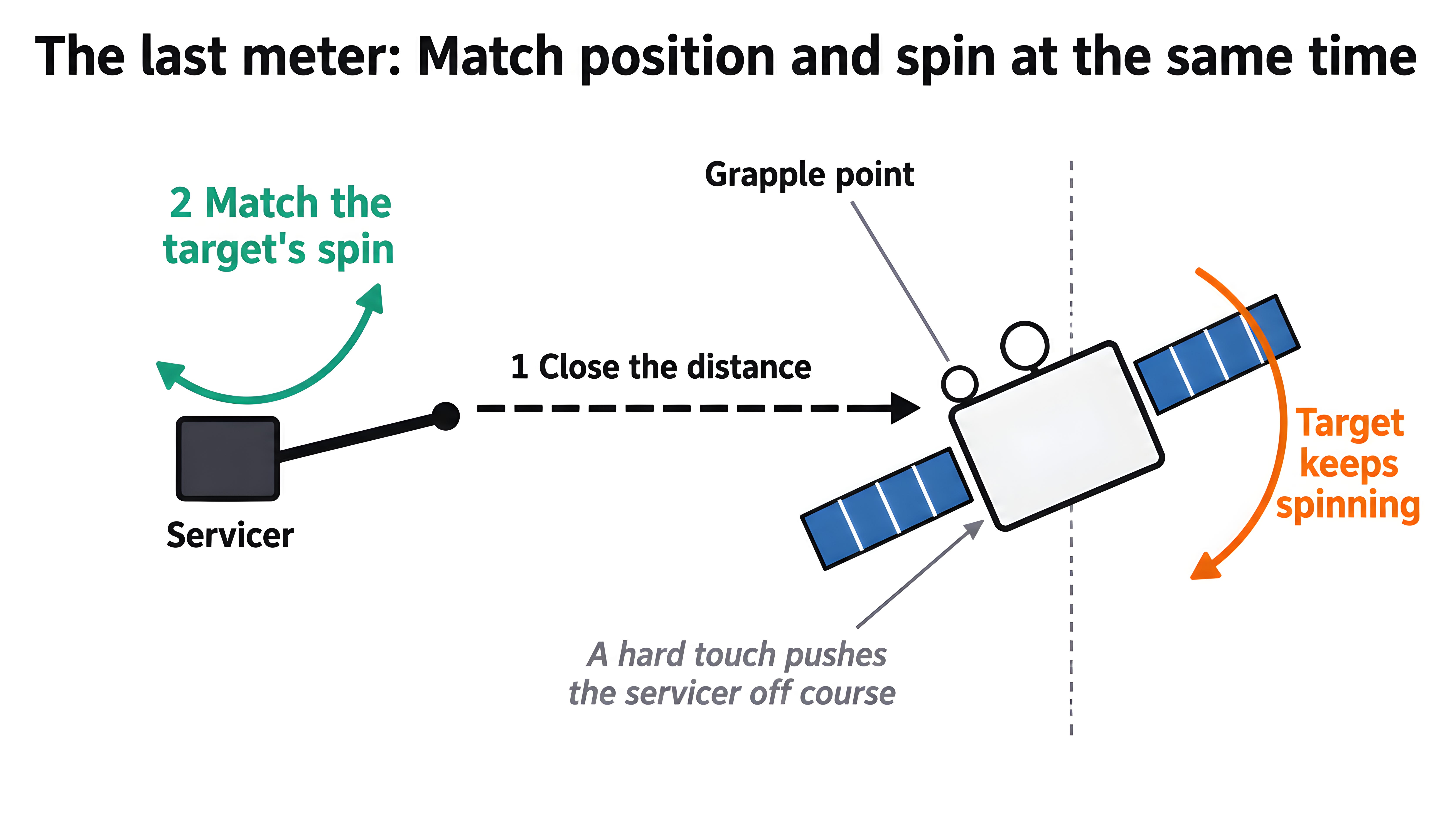
That coupling matters most at contact. When a robotic arm touches a tumbling body, the reaction pushes the servicer backward, and the arm acts as a long lever, so a gentle nudge at the tip can throw the vehicle off course. The control law has to hold the servicer at a safe standoff, match the target’s rotation closely enough that contact becomes a controlled transfer of momentum, and retreat if the target moves unexpectedly.
Ongoing work tests how far one control law can stretch across a range of target masses and rotation rates, from satellites built to be caught to the far larger population that was never meant to be.
Read More:
[The Conversation] - Rescuing satellites is harder than it looks – a growing space junk problem will make doing so more important