Podcast
Steve S. Medeiros, University of Connecticut - An American Soldier and an Iraqi Interpreter Find Common Ground
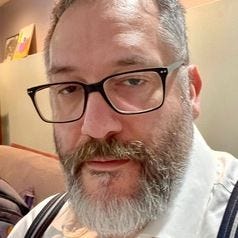
Finding common ground in a war zone is difficult but not impossible.
Steve S. Medeiros, PhD candidate in the Experimental Anthropology Lab at the University of Connecticut, examines how tradition can create connections during combat.
Faculty Bio:
Steve S. Medeiros
-PhD Candidate
Experimental Anthropology Lab
University of Connecticut
-Affiliated Researcher
William Joiner Institute for the Study of War and Social Consequences
University of Massachusetts, Boston
https://anthropology.uconn.edu/
https://www.umb.edu/joinerinstitute/
Transcript:
I liked Muhammed. Under different circumstances I think we would likely have been good friends. He had the dangerous job of interpreting for my Army unit during the Iraq war in 2004. So, when he disappeared for a while, I assumed the worst.
But then he turned up with an uncharacteristically scruffy beard, explaining that as a Shiite Muslim, he was observing a period of not shaving to mourn the death of his uncle—an important man in his life.
I immediately remembered my father describing an identical tradition from when he was growing up Catholic in the Azores.
Temporarily at least—our roles as soldier and interpreter, American and Iraqi, Catholic and Muslim—faded into the background. We were two twenty-something guys talking about our fathers and uncles, and an unlikely shared tradition.
Decades of research have shown that humans are “groupish.” We gravitate toward groups and shape our identities through the people and communities we belong to. Think about how much of your life connects to your family, friends, religion, and nation.
Imagine you’re a devoted Red Sox fan traveling abroad. You walk into a pub and notice someone wearing a Red Sox cap and jersey. In an unfamiliar place, that symbol becomes a beacon of familiarity—an invitation to connect with someone who feels less like a stranger.
That’s what happened between Muhammed and me. Discovering we shared this mourning tradition allowed us to connect personally despite the hostile environment.
My father died in 2019. It turns out my father was wrong in thinking this tradition’s utility had long since passed. As my large family kept vigil as he slipped away, I told the story of Muhammed. Moved, my nephews decided not to shave for seven days, to mourn my father—an important man in our lives.
Read More:
[The Conversation] - A shared mourning ritual helped an American soldier and an Iraqi interpreter find common ground