Podcast
Maen Abdelrahim, Houston Methodist Research Institute - Detecting Cancer Recurrence Earlier via Blood Test
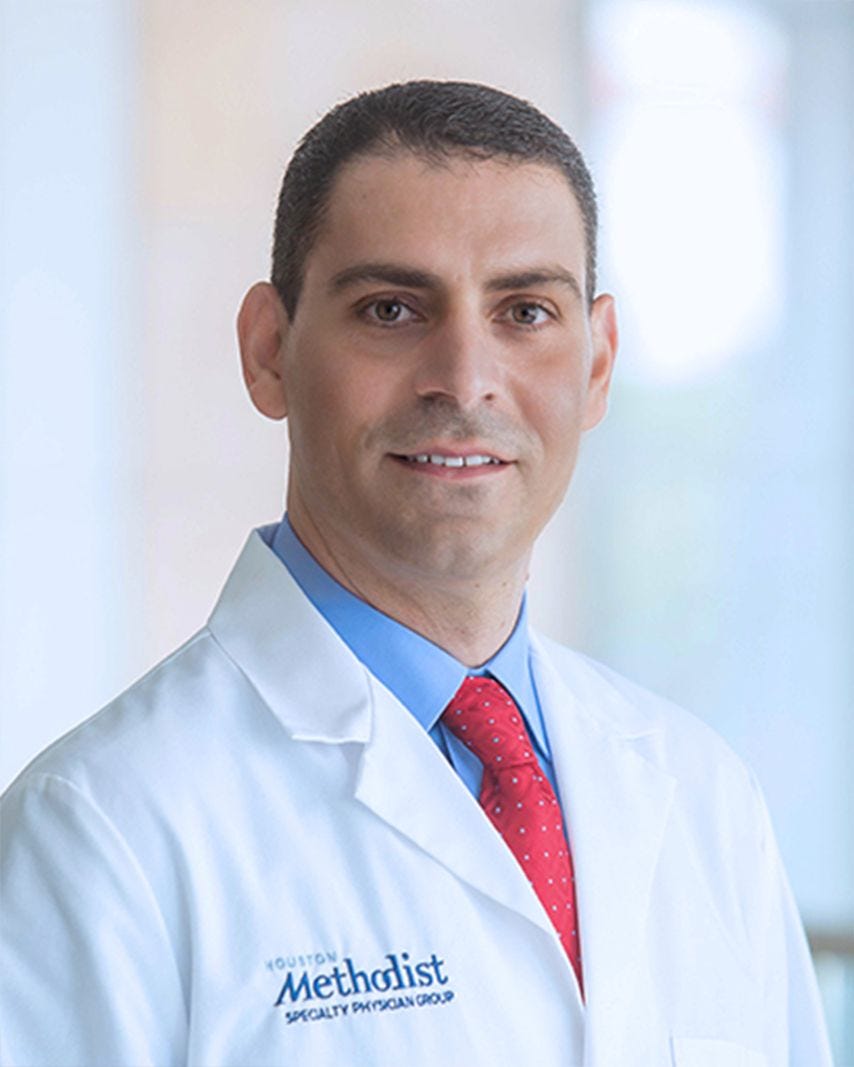
On Houston Methodist Week: A simple blood draw alongside imaging could benefit cancer patients in the future.
Maen Abdelrahim, chief of gastrointestinal medical oncology, explains why.
Faculty Bio:
Dr. Abdelrahim earned his PharmD, followed by a PhD in Pharmacology and Toxicology, and subsequently an MD from Texas A&M University. He completed his residency at Baylor College of Medicine and a fellowship in Medical Oncology at Duke University.
As Chief of Gastrointestinal Medical Oncology at Houston Methodist Neal Cancer Center, Medical Director of the Cockrell Center for Advanced Therapeutics (CCAT) Phase I Program, and Professor of Medicine at Weill Cornell Medical College, Dr. Abdelrahim is leading efforts to shape the strategic direction of GI and transplant oncology. He integrates cutting-edge clinical trials with patient-centered care to drive transformative outcomes. Under his leadership, CCAT has established a robust pipeline for early-phase clinical trials, including novel CAR T cell therapies for gastrointestinal cancers such as cholangiocarcinoma (CCA) and colorectal cancer (CRC). He oversees the design, scientific review, and execution of these trials while fostering multidisciplinary collaboration and innovation across oncology and research teams.
Transcript:
For patients who’ve had a liver transplant to treat liver cancer, one of the biggest fears is recurrence, the cancer returning. Our team set out to see whether a blood test could help us catch that earlier, and with fewer invasive procedures.
The test is called circulating tumor DNA, ctDNA. It picks up tiny fragments of cancer DNA that tumors shed into the bloodstream. We made this test personalized: we first analyze each patient’s own tumor tissue to identify its unique genetic fingerprint, then we design a blood test that watches for that exact fingerprint after transplant.
In our study, we followed 38 liver transplant recipients with hepatocellular carcinoma or cholangiocarcinoma, two of the most common forms of liver cancer. We tested these patients with ctDNA alongside our usual surveillance tools: imaging scans and standard tumor-marker blood tests.
Over the course of the study, we confirmed cancer recurrence by imaging in six patients. Three of them also had a positive ctDNA result. And importantly, when the ctDNA test came back positive, it was right, we saw no false positives, meaning a positive result reliably confirmed real recurrence.
I led this study alongside my colleagues, here in our GI oncology program. We believe catching recurrence sooner can change outcomes for transplant patients, who often have limited treatment options once cancer returns.
This is the first study to test this approach prospectively, and we’re continuing to study it on a larger scale before it becomes standard practice. But it points to a future where a simple blood draw could work alongside imaging to give our patients, and their doctors, more confidence, and maybe more time.
Read More:
[Houston Methodist] - Using ctDNA to Detect Recurrence & Guide Management of Hepatocellular Carcinoma