Podcast
Kristin Bidoshi, Union College - What Does it Mean to Teach Language During War?
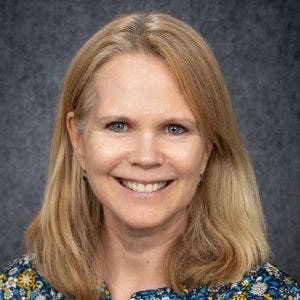
On Union College Week: Learning goes on, even during war.
Kristin Bidoshi, professor of Russian in the Department of Modern Languages and Literatures, discusses this through language teaching in Ukraine.
Faculty Bio:
Kristin Bidoshi is a professor of Russian in the Department of Modern Languages and Literatures and the director of Russian and East European Studies program at Union College, a small liberal arts college in Schenectady, NY. She conducts fieldwork in Eastern Europe and publishes on topics including the use of oral tradition in the works of Anton Chekov, Nikolai Gogol and Liudimila Petrushevskaia. She also publishes in applied linguistics, specifically in Russian language pedagogy, and has recently presented workshops on building, evaluating and using custom AI tools in the language classroom.
Kristin also directs a Teaching English Practicum in which Union College students teach English as a Second Language (ESL) classes online to Ukrainian children or in-person ESL classes to refugees and immigrants in the NY Capital District.
Transcript:
What does it mean to teach language during war? The answer seems obvious. Language instruction can resume remotely, focusing on basic communicative skills. But this captures only part of the problem. War-time language teaching is never pedagogically neutral. Instruction unfolds within asymmetries of vulnerability and responsibility as classrooms become places where global politics and ethical judgment emerge.
My research, grounded in applied linguistics, examines foreign language education during war. Drawing on Michael Byram’s theory of intercultural citizenship, qualitative data from student teachers’ reflections and classroom observations of their remote English classes with Ukrainian children, this research examines how wartime English instruction moves beyond its expected focus on grammar and communication to become an ethical and civic practice, reshaping everyday instructional approaches, classroom roles and even student teachers’ understandings of language teaching, power and civic responsibility.
A student’s apology for missing class because “the power was out,” is a stark reminder of how the war shapes daily life. When a student mentions life “before the war,” grammar becomes less important as the teacher decides how to preserve instructional routine and acknowledge hardship. In these moments, skill instruction gives way to responding with care to lives shaped by conflict.
In times of war, education is fragile. This research reminds us that language pedagogy, theorized through intercultural citizenship, can sustain human connection when war seeks to undo it.
Read More:
[Space of Knowledge] - English speaking club with American students