Podcast
Katharine Mach, University of Miami - Actionable Knowledge Adapting Cities to Relentless Heat
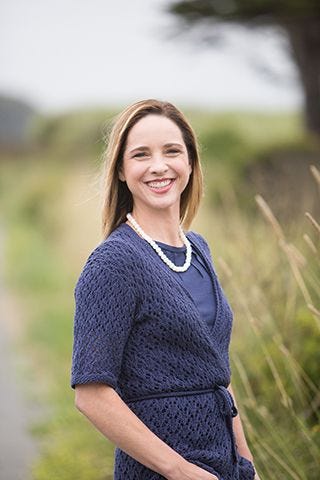
How do we beat the heat in cities going forward?
Katherine Mach, professor and chair of environmental science and policy at the University of Miami, explores some tools that can help.
Faculty Bio:
Katharine Mach is professor and chair of the Department of Environmental Science and Policy at the University of Miami Rosenstiel School of Marine, Atmospheric, & Earth Science. During Spring 2025, she was the Coleman P. Burke Distinguished Visiting Professor at the Yale School of Environment. Her research assesses climate-related risks and response options to address increased flooding, extreme heat, wildfire, and other hazards. Through innovative approaches to integrating evidence, she informs effective adaptations to the risks.
Mach was the 2020 recipient of the Piers Sellers Prize for world leading contribution to solution-focused climate research. Mach has served as a chapter author or lead in the Fourth through Sixth US National Climate Assessments and the IPCC Sixth Assessment Report and as a member of the National Academies Climate Security Roundtable. She serves as Co-Editor in Chief for Climate Risk Management, an editorial board member for Oxford Open Climate Change and Environmental Research: Climate, and an advisory committee member for the Aspen Global Change Institute. Across all of her research projects, she engages in relevant policy processes and explores and discusses climate risk and adaptation with the media, the private sector, nongovernmental organizations, and communities.
Transcript:
As global temperatures rise, extreme weather isn’t just becoming more severe, it’s becoming continuous. Many people are grappling with new relentless hazards. Chronic heat is one of them, defined as dangerous conditions that persist for 90 days or more every year.
The impacts of chronic heat add up. Our research shows that some residents are enduring indoor home heat indexes that average over 100 degrees Fahrenheit for 24 hours a day, consecutively. Chronic heat can severely impact physical and mental health, household finances, and community well-being. This isn’t a brief spike, it’s an underrecognized, daily crisis happening in our communities.
Meeting this threat requires what my colleagues and I call actionable knowledge. Our Chronic Heat Research Group brings together over 100 scientists, doctors, community leaders, and officials monthly. Together, practitioners are taking action, and we’re using complex climate modeling and analysis to provide evidence on the risks and the effectiveness of different responses.
The tools for decision making range from hyper-local indoor heat risk mapping to policy blueprints. By connecting climate risk science to decision makers, we empower cities to deploy cooling resources preemptively to protect residents, and update the infrastructures needed, ideally before crisis points occur.
Intensifying chronic heat isn’t just a temporary surprise, it’s a new normal. Treating chronic heat as a permanent adaptation challenge is how we build safer and more resilient cities worldwide. This work demands that we reimagine urban planning, public health systems, and energy grids for a hotter reality, turning short-term emergency response of the past into stable protection for people and the environment at large.